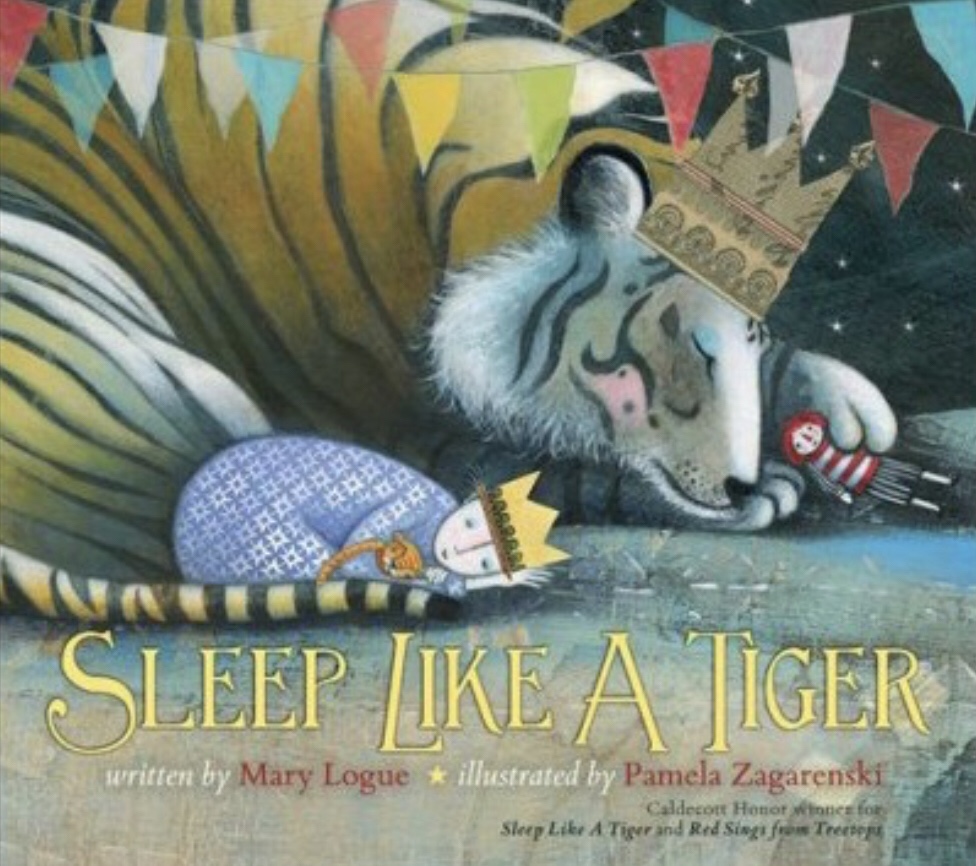
This colorful picture book that is filled with figurative language and intricate illustrations is sure to become a classroom (or bedtime) favorite. Parents and grandparents will be able to relate to the interaction of characters in this book as bedtime has come. Children will delight in the variety of animal references and visual imagery that extends from the pages. Sleep Like a Tiger may be my new favorite children’s book!
As a parent I may have once or twice, or countless times begged my children to go to sleep at bedtime. My sons were always so creative conjuring up reasons that they could not possibly fulfill my request. Like the little girl in this story, my sons often would respond that they were not sleepy and could not go to sleep. I don’t recall my children ever asking me if everything in the world goes to sleep, but I found myself smiling as I read how the parents in this book answered their child’s questions. 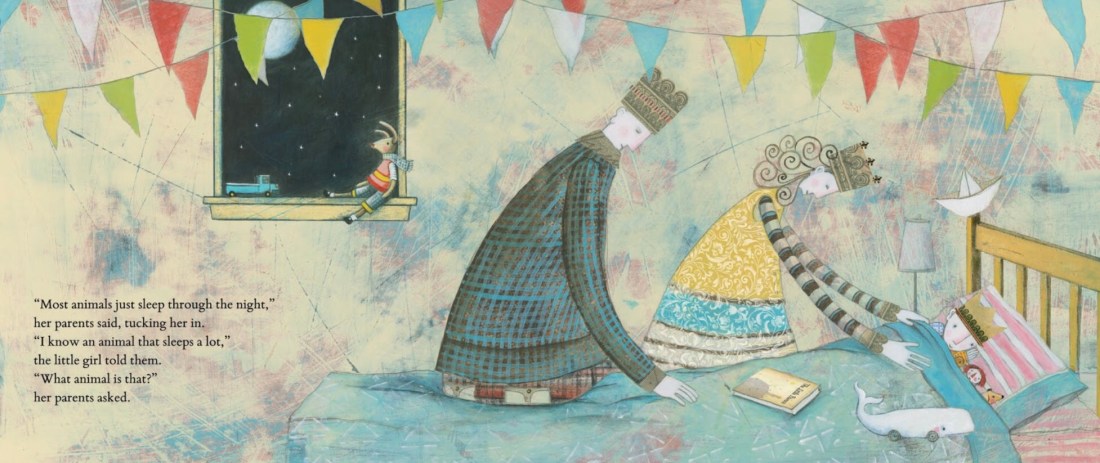
In the classroom when the lesson calls for students to learn about descriptive words and figurative language the phrase mental image or mind movie may be used. Mary Logue’s words combined with Pamela Zagarenski’s illustrations create wonderful mental images of “otters floating in a stream” and snails “curled up like a cinnamon roll inside their shells.”
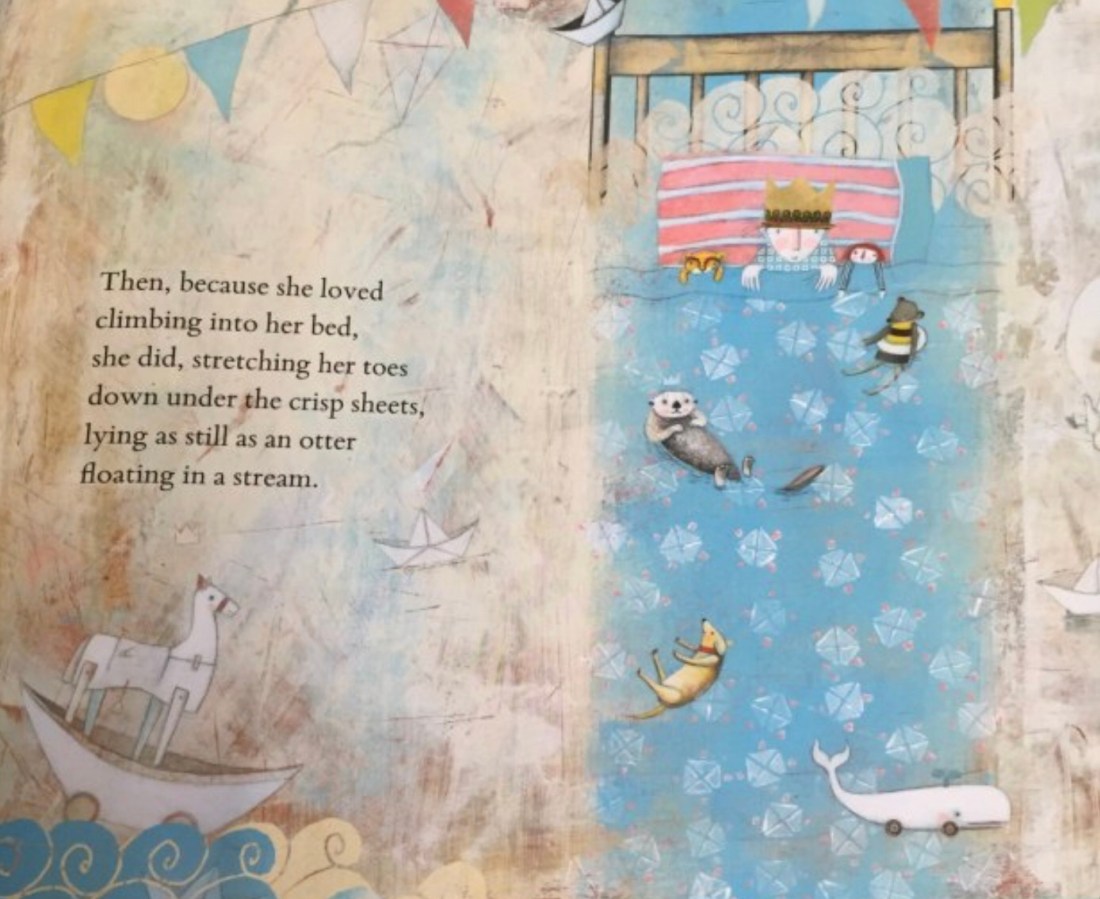
The rich figurative language used by the author invites the reader to explore using unrelated words to define and describe ordinary objects. The use of metaphors and similes draws connections that make sense. The illustrations provide a glimpse of what those connections might look like if they were literal. Sleep Like a Tiger encourages readers to imagine what it is like when it is time to sleep for animals…and children alike.
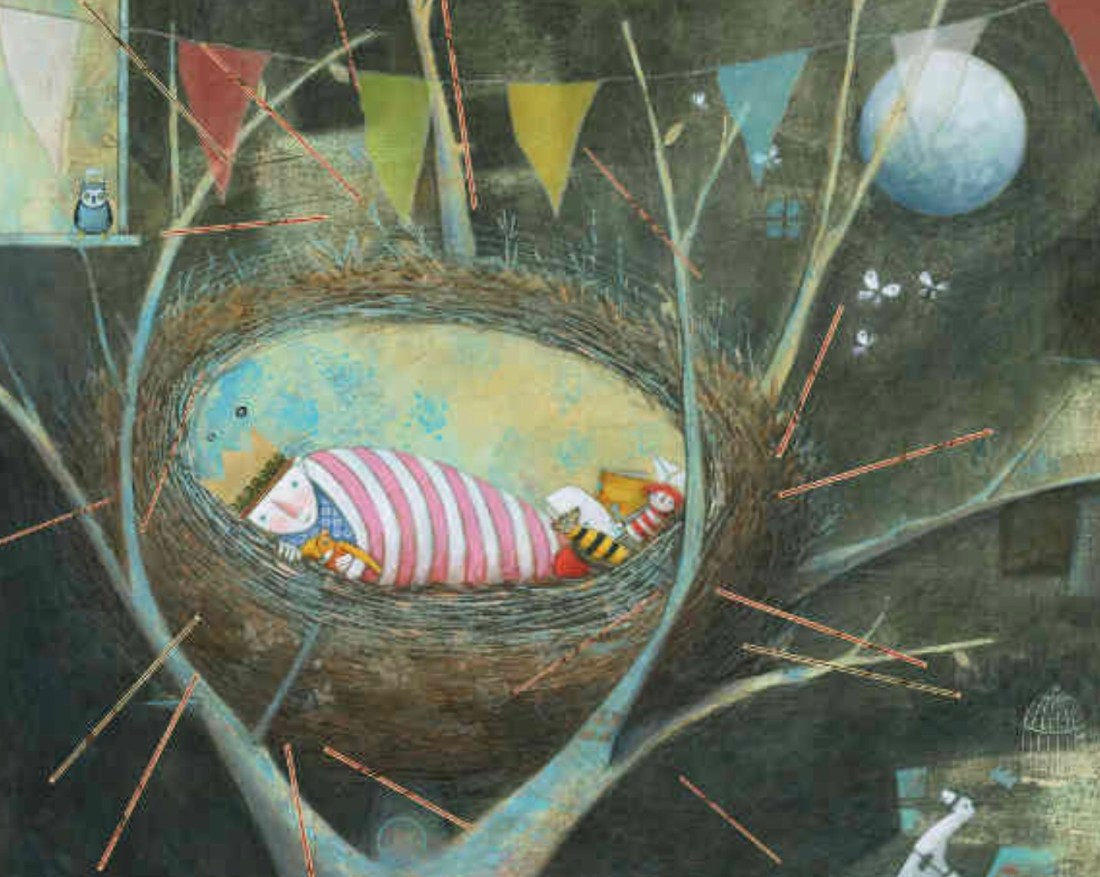
Perhaps my favorite line and illustration from this book come when the author describes the little girl’s bed, a cocoon warm and cozy.
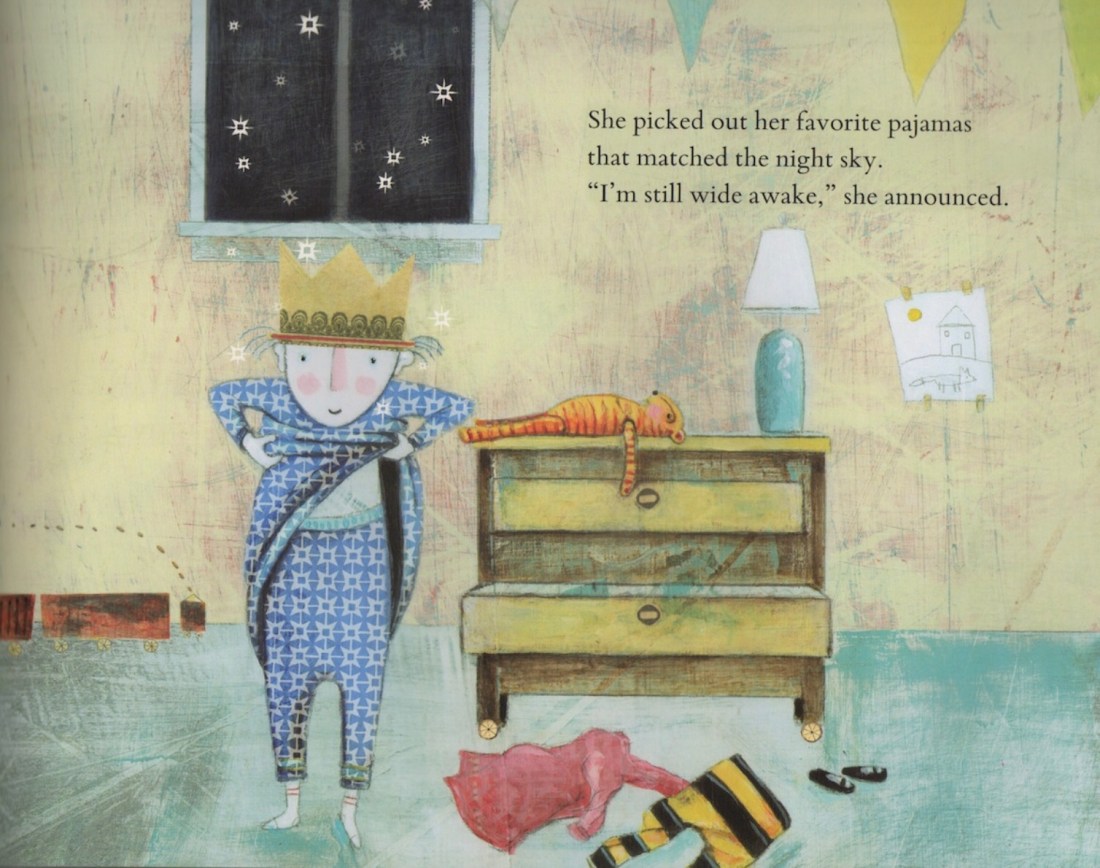
The picture book is filled with detailed artwork that lends itself to a classroom picture walk with young students. Even students who are pre-reading or emergent readers will find the illustrations a treasure trove of colors and images. The image above is both simple and detailed at the same time. Children who may not be able to read the words yet, will quickly recognize what is happening in this picture and be able to make predictions and draw conclusions based on the illustrations.
Although this book may be best suited for primary students, I love the idea of bringing this book into the intermediate classroom to reinforce lessons in figurative language and extend or introduce science lessons about animal characteristics. I would ask my students, how do animals sleep? This book could be used as a resource to excite and interest students prior to selecting an animal to research and write about. The value of this book in the classroom is deep and wide.
Ideas for Classroom Incorporation of Sleep Like a Tiger:
- ELA: figurative language, descriptive words, imagery, visualization, metaphors, similes, picture walks, author/illustrator studies, text features
- SCIENCE: animal characteristics, phases of the moon, healthy habits – sleep
 Mrs. Kinnamore’s Bookshelf