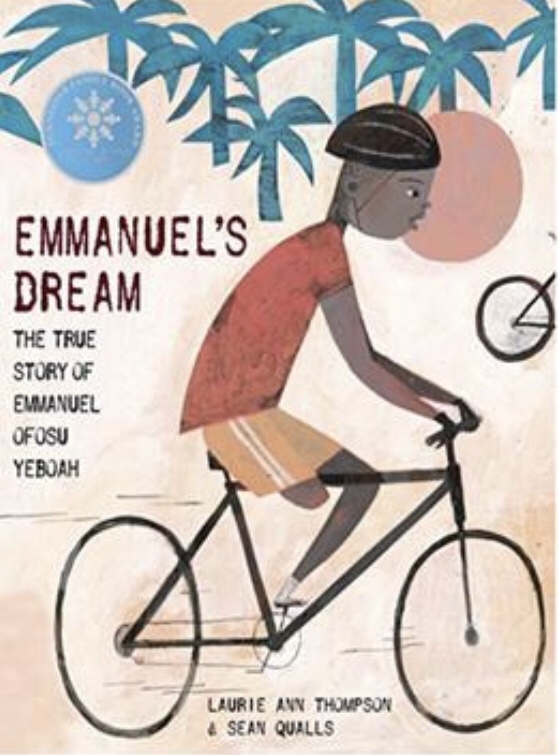
Emmanuel’s Dream: The True Story of Emmanuel Ofosu Yeboah, by Laurie Ann Thompson and Sean Qualls

“Be respectful, take care of your family, don’t ever beg. And don’t give up.” – Mama Comfort

Emmaunuel Ofosu Yeboah is a real person who was born missing part of his right leg. Where he was born in Ghana, children with disabilities were not allowed to attend school like normal children. Emmanuel’s mother, Mama Comfort, was not satisfied with that and insisted that her son would attend school. She carried him back and forth to school until he had grown too big for her to carry. At that point, Emmanuel was determined to keep going to school so he hopped to and from school every day on his one leg.
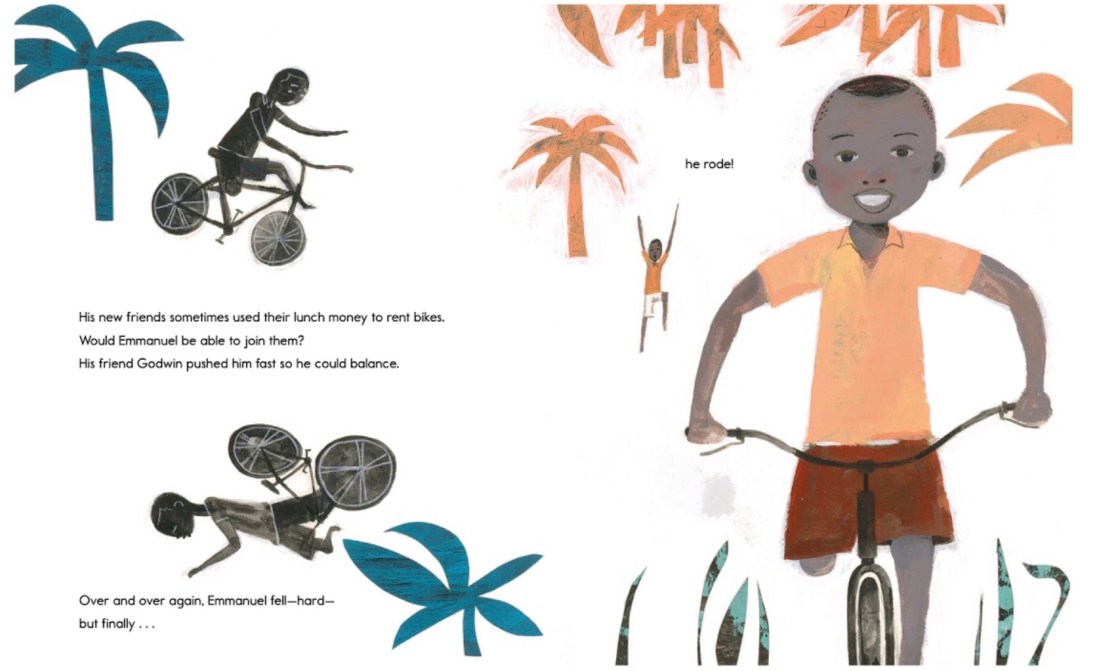
Emmanuel knew that he was different from the other children at his school, but he wanted to play with them and do the things that they were doing. He was very clever and extremely determined. Emmanuel found a way to play with his classmates and to learn to ride a bike peddling with just one leg.
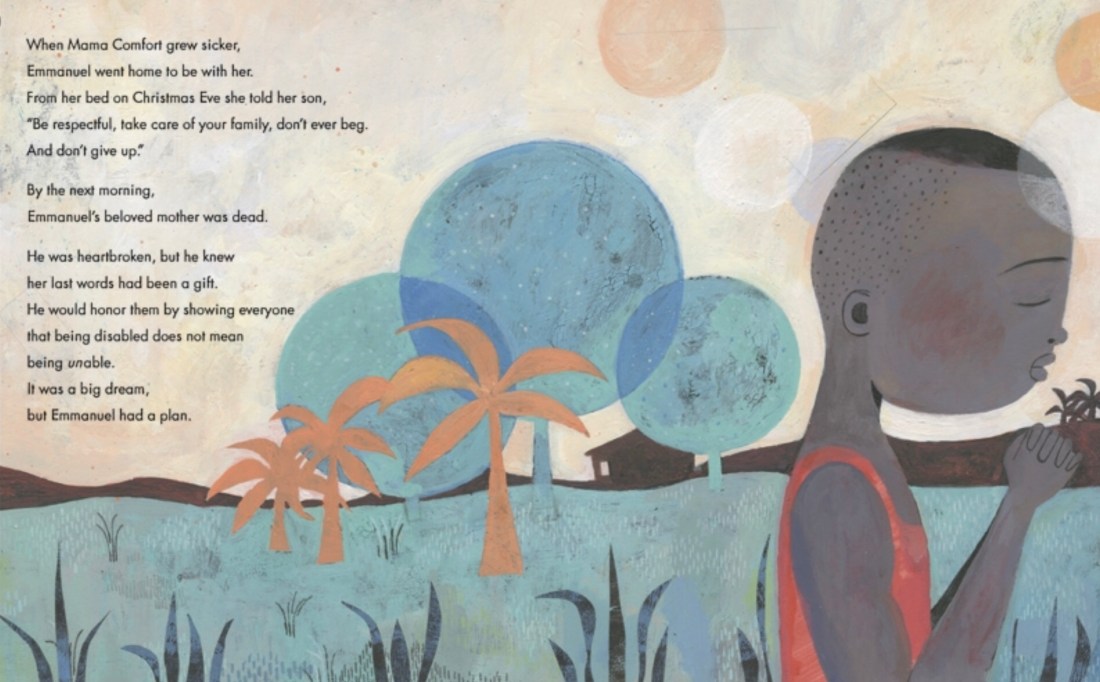
Emmanuel’s mother had great faith and was always encouraging her son to follow his dreams. Eventually the time came that Mama was too ill to care for Emmanuel and his siblings, so Emmanuel left to go to the city where he could work and earn money. Finding work was not easy as many people did not believe that Emmanuel was capable of working due to his disability. He was told by many people to go beg like other disabled people. This insulted Emmanuel who continued to follow his mother’s instructions to “Be respectful, take care of your family, don’t ever beg. And don’t give up.”
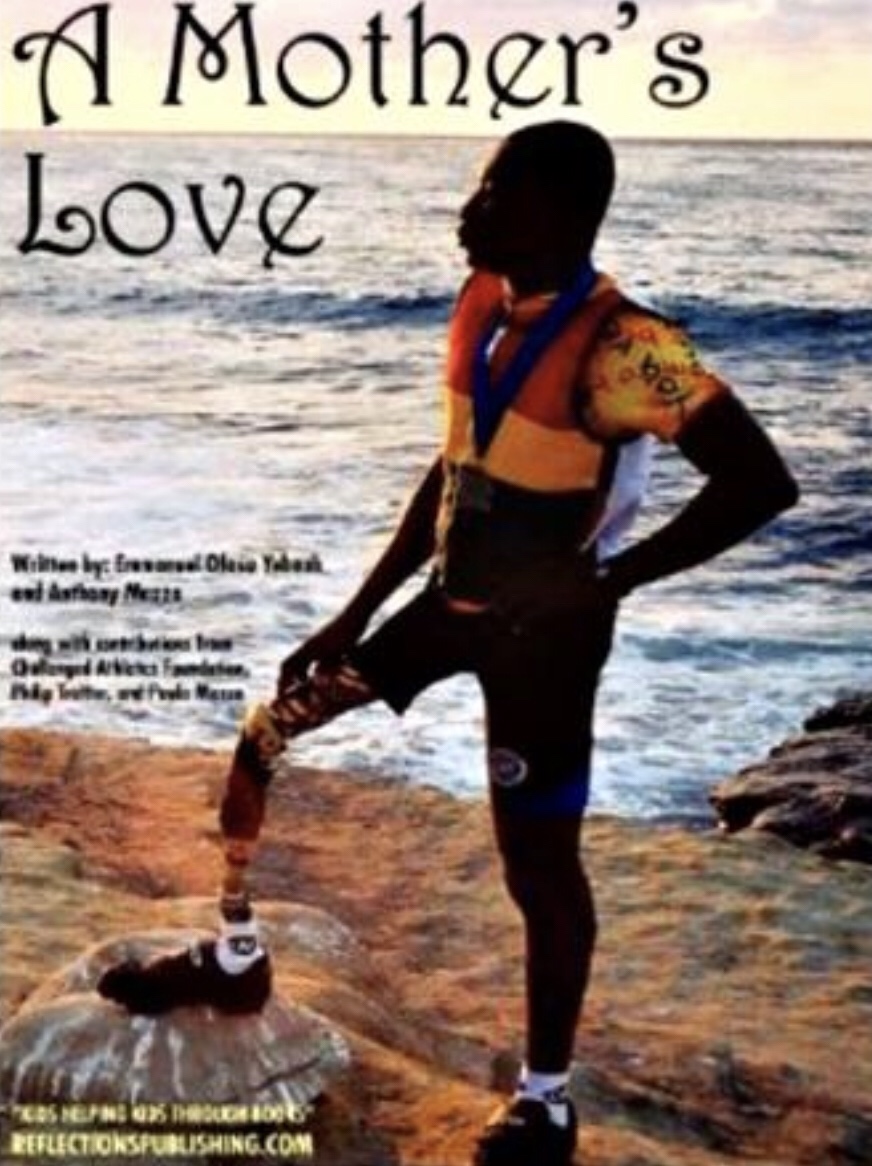
Emmanuel was gone from home for two years before he returned home before his mother died. His mother’s words and guidance continued to impact Emmanuel in every part of his life. Mama Comfort had told Emmanuel to follow his dreams, that his disability did not mean inability. He took her words to heart and went on to share his ability to persevere despite other people’s expectations of what he could not do. Emmanuel continued to advocate for his own rights as a disabled person, as well as the rights of other people with disabilities.
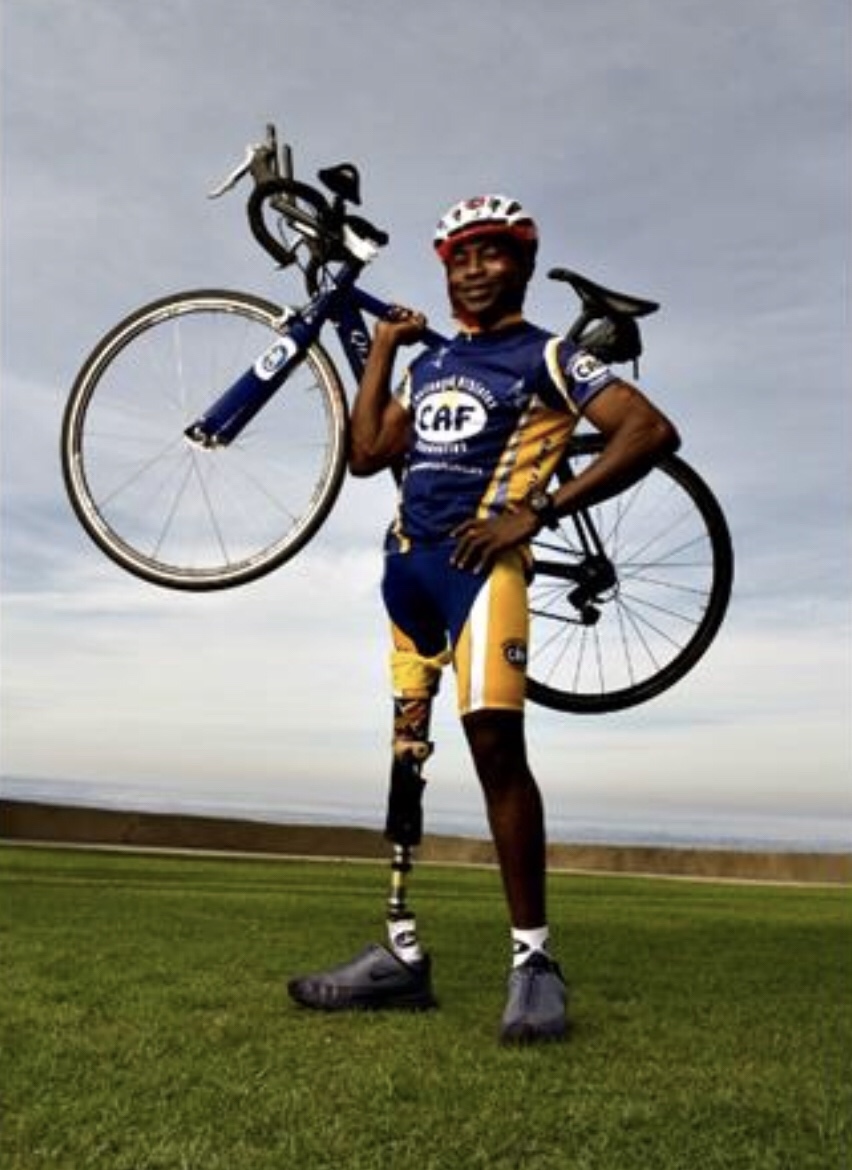
Emmanuel has been recognized for his continued work on behalf of others with disabilities. This story tells of his childhood and how to set out on the path to advocate for others. Children and adults will be inspired to learn about Emmanuel and how he followed his mother’s instructions and followed his dreams while helping others as he followed his dreams. This is a remarkable (and true) story about a young man who is a living breathing example that disability does not mean inability.

This book would make a great addition to the elementary classroom. Based on a real person with a physical disability who not only overcame that disability, but went on to do great things setting an example for people with and without disabilities this story teaches readers that where there is a will there is a way. Classrooms are made of diverse learners, and students of all different abilities make up today’s classroom. Students will be able to use this book to learn about a real person with a physical disability and how he worked to be recognized as person who should be treated as a person who is capable instead of a disabled person who should not go to school or work or do things like every one else.

Below is a video of Emmanuel, telling his story.

https://youtu.be/BHUDh82sZYs

Ideas for Classroom Incorporation of Emmanuel’s Dream: The True Story of Emmanuel Ofosu Yeboah:

  • ELA: multicultural literature, literature based on real people, connections to diversity, what is your dream and how will you make it a reality, sequence of events
  • GEOGRAPHY: locate Ghana on a world map, identify the distance between Ghana and the United States, identify key facts about Ghana and the United States to compare and contrast
  • SOCIAL/EMOTIONAL: identify what it means to have a physical disability, discuss the difference between disability and limitation, create a visual representation of how Emmanuel’s story can teach all people to follow their dreams
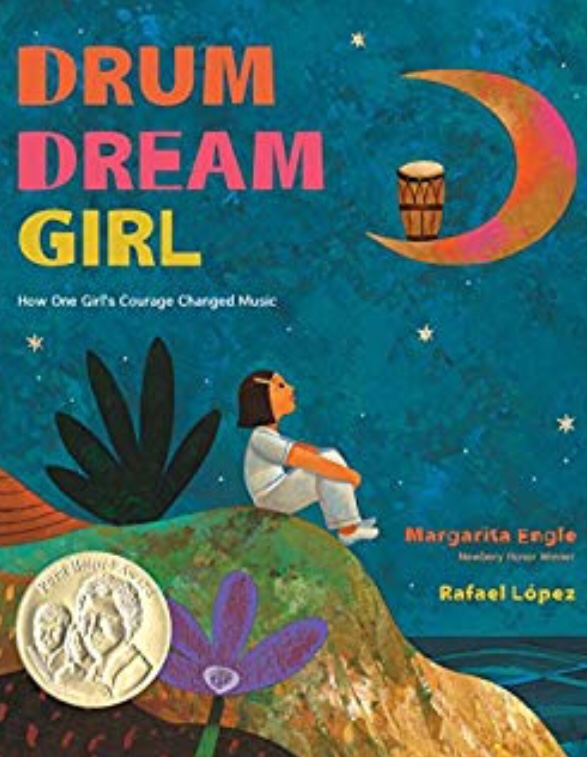
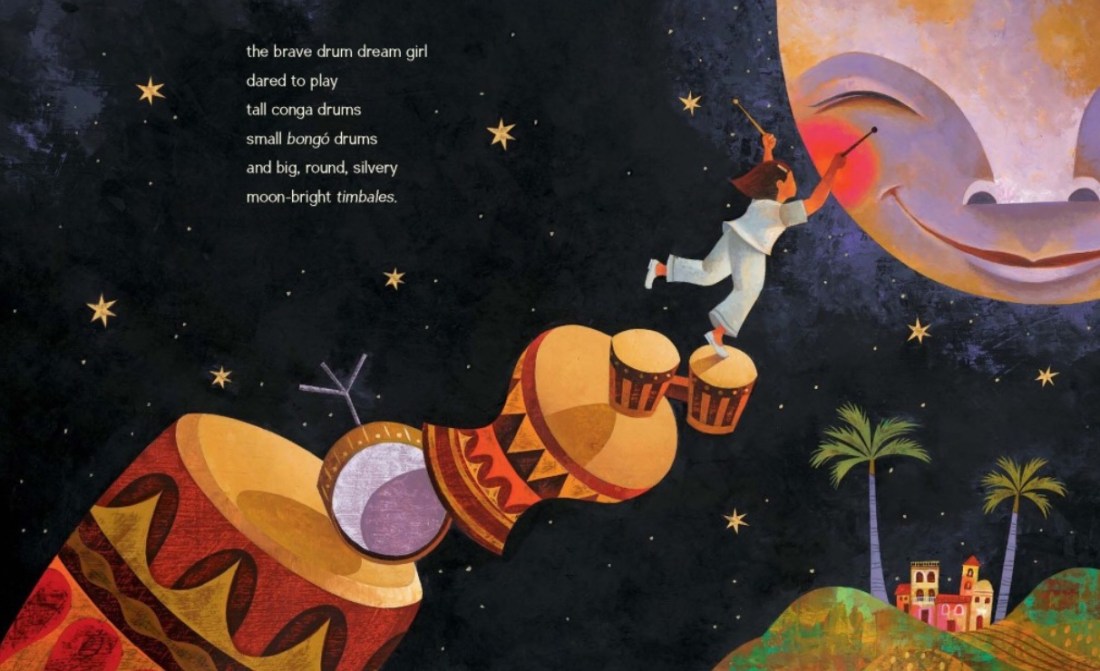
The Drum Dream Girl, by Margarita Engle and illustrated by Rafael Lopez

What does it mean to be brave? How do you define courage? What would you do if you were told you could not use your talent because you are a girl? (Or a boy?) In this beautifully illustrated picture book, author Margarita Engle shares the story of the Drum Dream Girl who is brave enough to follow her dreams of playing the drums.

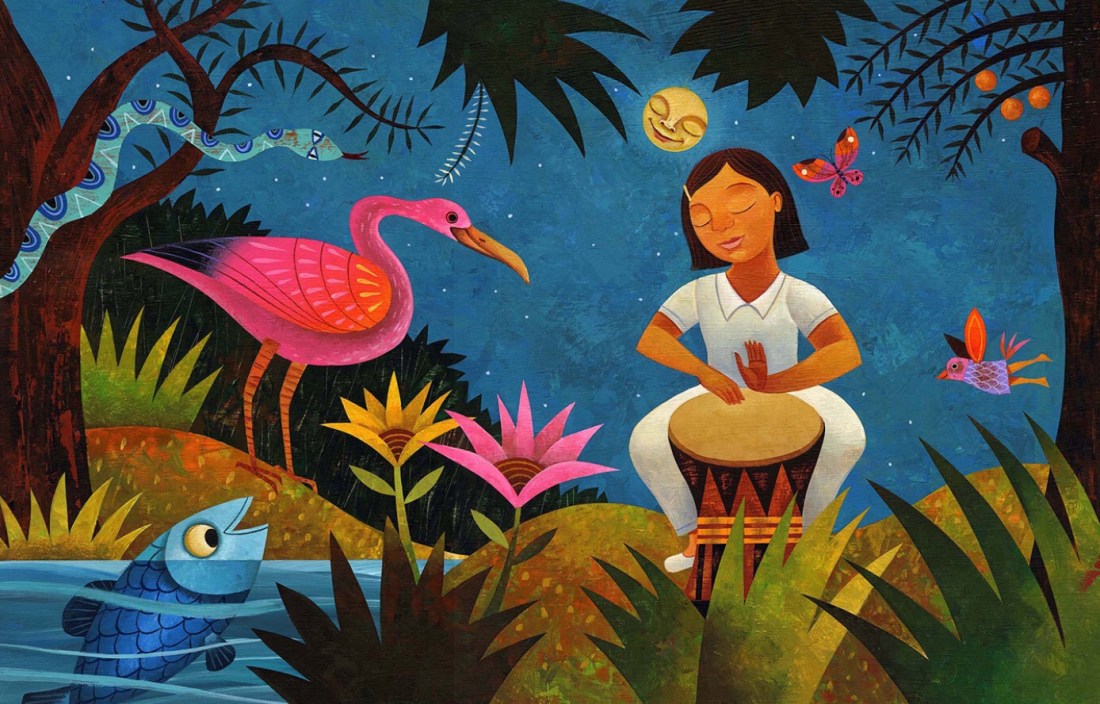
The Drum Dream Girl lives on the Island of Music, in the City of Drumbeats where she is surrounded by the tapping and rapping of drums in every form imaginable, but because she is a girl she is told that she should not follow her dreams to play drums. Her sisters encouraged her to come dance with them, but she longed to drum instead. Her father instructed her to stop dreaming of drumming, but she longed to pound congo and bongo drums. Finally, her father promised to find a teacher that would guide his daughter’s rapping and tapping to become the very thing she had been forbidden to be – a drum girl.

The vivid colors illustrated in this book perfectly complement the author’s word choices to eloquently describe the Island of Music and City of Drumbeats. The descriptive words provide enchanting imagery for readers to see the girl and all the drumming that surrounds her in this magical place.

This book would be a wonderful addition to the elementary classroom. Teachers could utilize the descriptive language, musical vocabulary, and figurative language. This book would be a wonderful pair to an exercise in beating on trash cans to create the pounding sounds that the Drum Dream Girl was able to turn into music. Students could brainstorm other materials that could be used for drumming as they learn about the different types of percussive instruments that are used by musicians. Teachers could use this story to discuss social emotional learning topics such as courage and bravery, and introduce or discuss what it means to be discriminated against. Students could be problem solvers and think about ways to encourage all people to follow their dreams, to be courageous, and to be brave.

Ideas for Classroom Incorporation of The Drum Dream Girl:

  • ELA: figurative language (onomatopoeia), descriptive language, parts of speech, vocabulary enrichment
  • SOCIAL and EMOTIONAL LEARNING: character traits – courage, bravery, persistence, determination, inclusion
  • MUSIC: percussion, instruments, types of sound

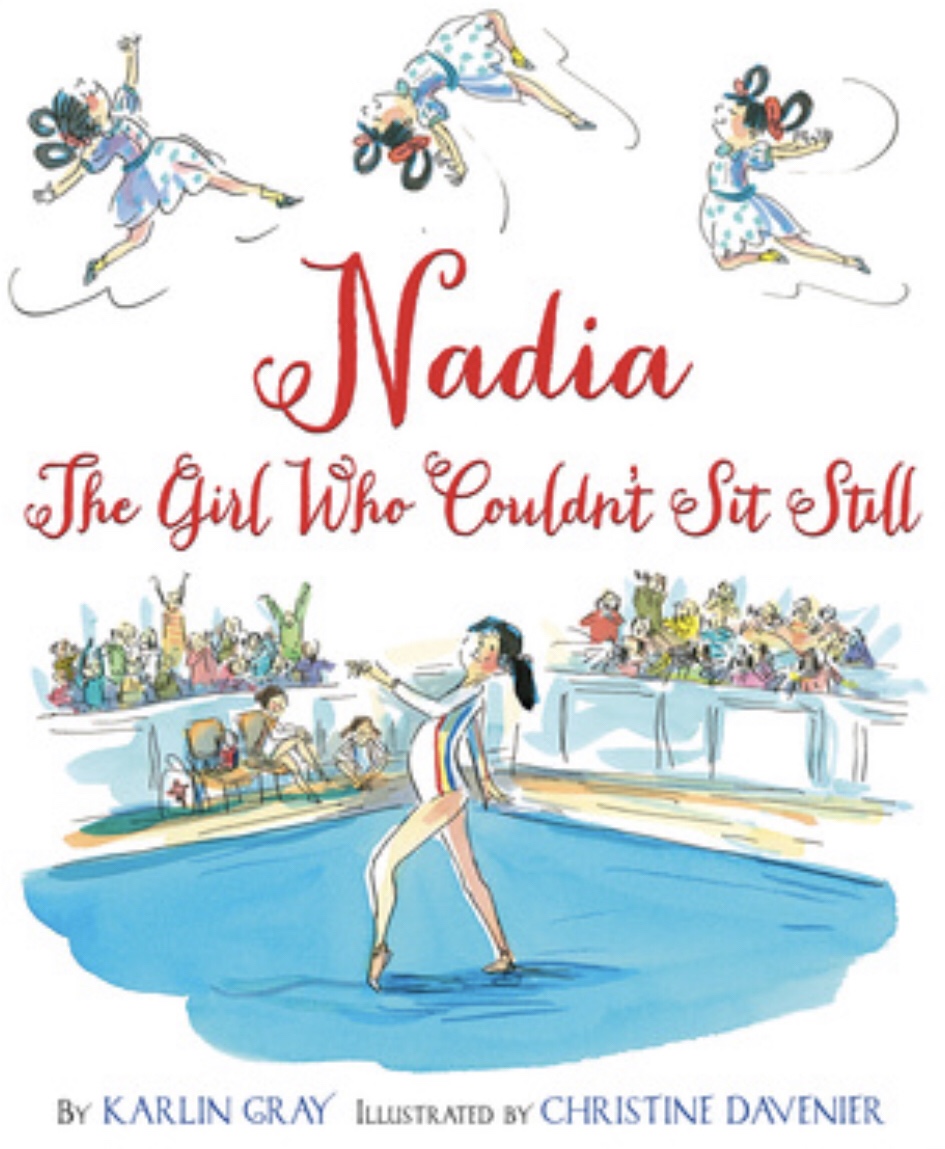
Nadia: The Girl Who Couldn’t Sit Still, by Karlin Gray and Illustrated by Christine Davenier

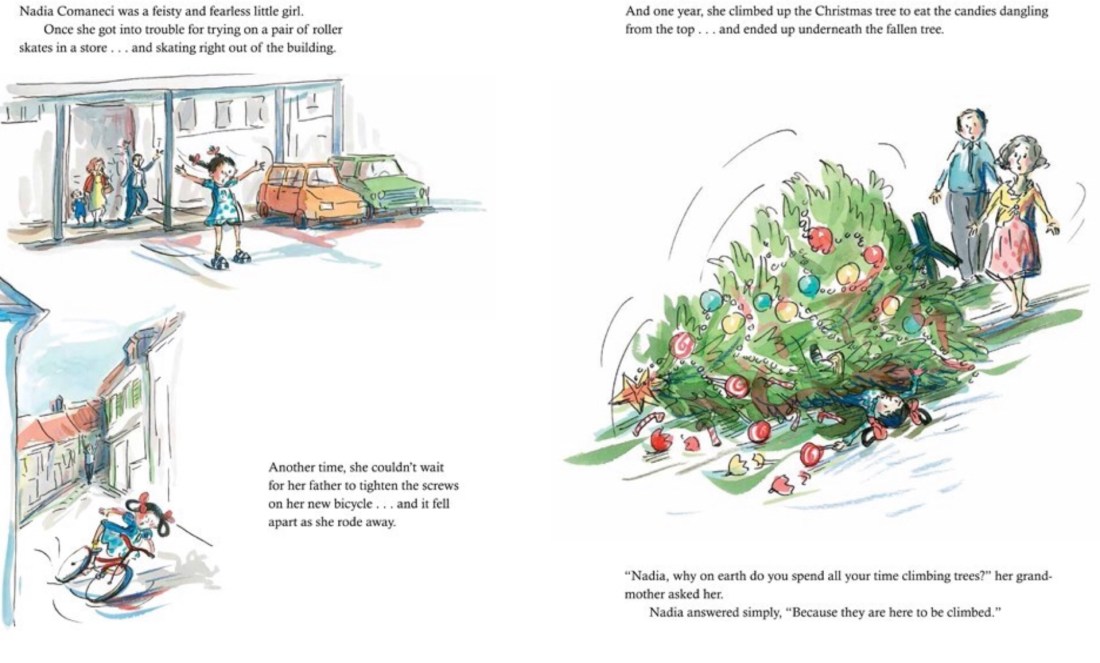
If you are a teacher, it is very likely you have a student in your class who like Nadia, struggles to sit still. I know that I do! This delightful picture book tells the story of Nadia Comaneci, a gymnast from Romania – the first gymnast to score a perfect 10, the little girl who found a way to use her energy in a positive way.

Showing my age, I can say I honestly remember watching the Olympics with my family gathered around the television set specifically to see Nadia Comaneci perform. And perform she did!! She was an amazing athlete, at such young age!!

Author Karlin Gray and illustrator Christine Davenier retell Nadia’s story as a little girl fiercely determined to get up every time she fell. She practiced her gymnastic events until she perfected each skill. Nadia is introduced as a little girl who was impatient, impulsive, and constantly moving. Her mother enrolled her active daughter in gymnastics and the rest we can say, is history.

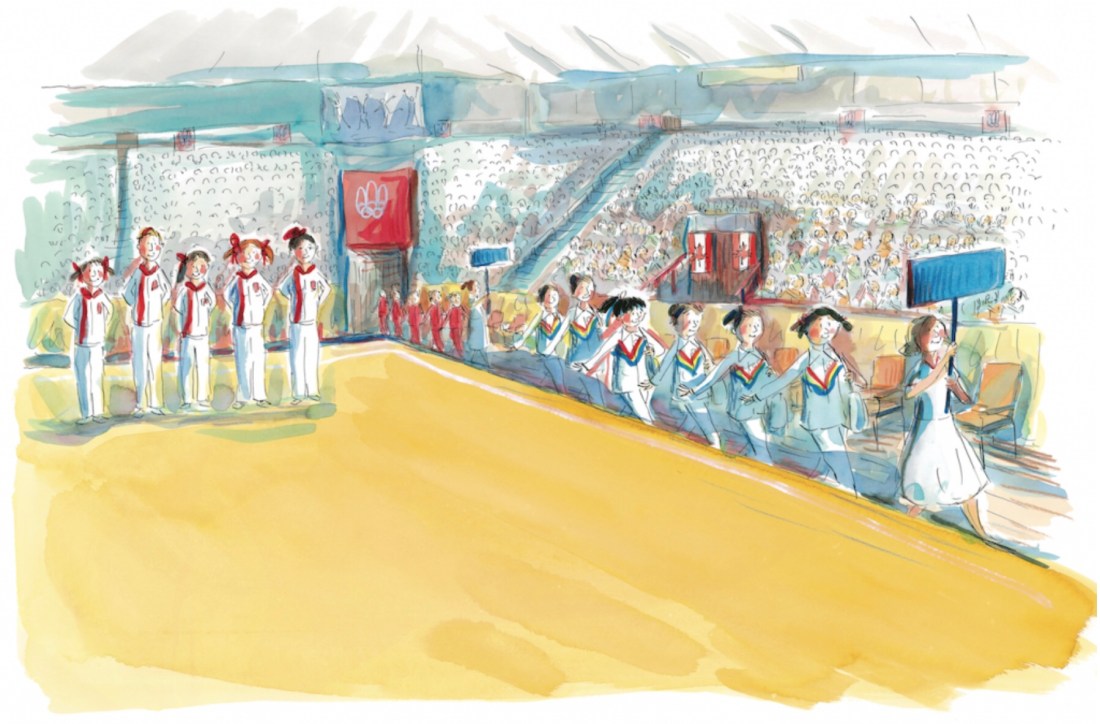
Students today many not know who Nadia Comaneci is, but they will most likely be able to relate to the little girl who couldn’t sit still. The fun illustrations and short passages make this a quick and easy read-aloud for an elementary classroom or small group. The opportunities to use this book as a part of a lesson are many! Teachers can use this book to talk about perseverance, self-control, determination, cause and effect, athletes, female athletes, historical events, annual events, geography, and many more I have not listed.

An interesting lesson that this book made me think of (also related to gymnastics) was when I was teaching 4th graders about the word vault. To my surprise, none of my 4th grade students knew what a vault was but they were doing an activity that expected them to recognize a bank vault and a gymnastics vault. Quickly I googled images to show my students the different kinds of vaults and came across videos of Simone Biles vaulting in competition. The students were entranced! (I thought is was pretty cool, too!)

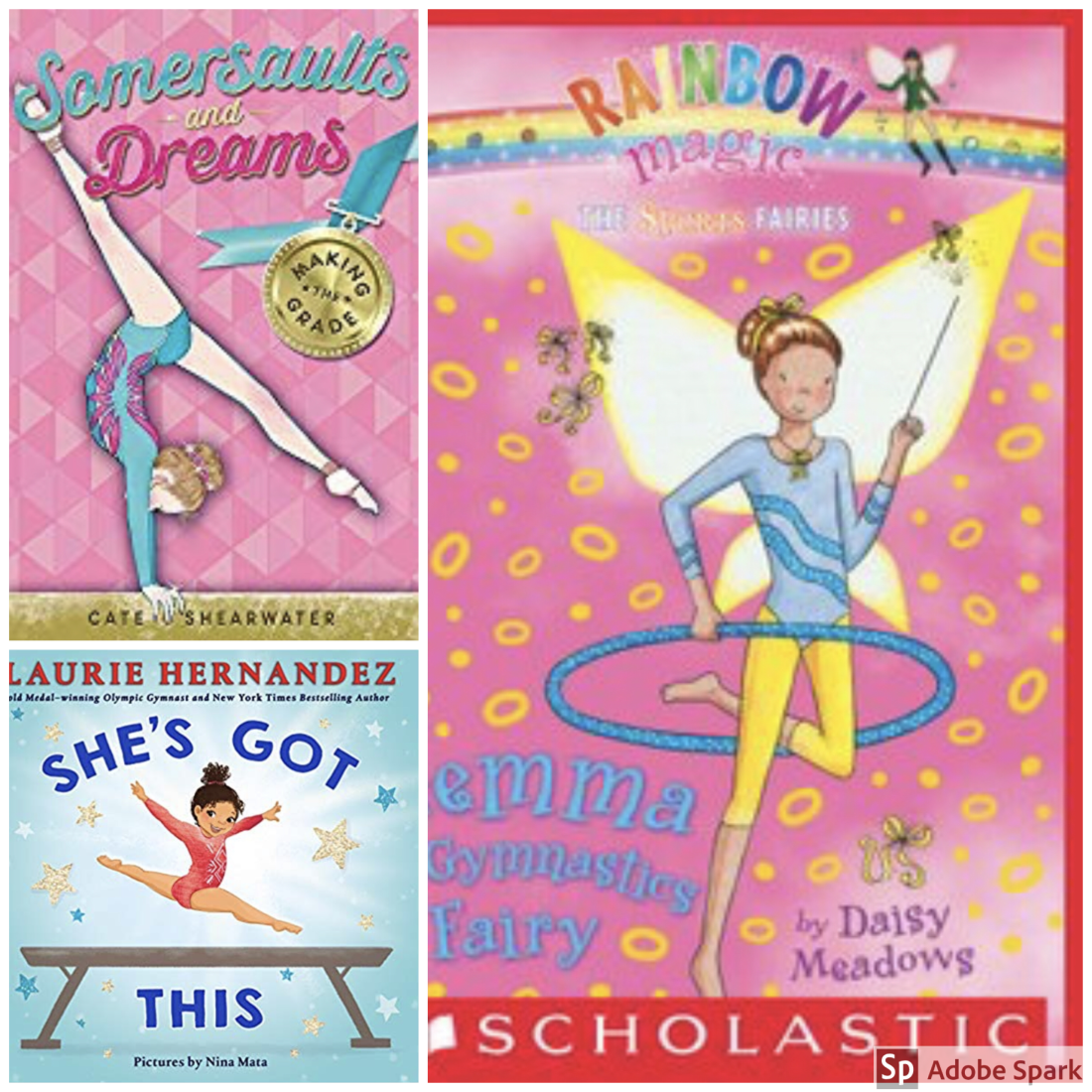
This book could also be an ice breaker to interest students in other books related to gymnasts or gymnastics. A quick search of gymnasts pulled up both fiction and non-fiction selections that would be suitable for the classroom. Students who are interested in reading more, or for the teacher wanting to add additional reading suggestions could use this as a chance to practice looking for a desired text or topic at the library. This would be a great way to develop research skills!

If you’re still looking for a hook, I highly recommend the videos of Nadia and Simone competing…they are AMAZING!!

Ideas for Classroom Incorporation of Nadia: The Girl Who Couldn’t Sit Still

  • ELA: biography, cause and effect, read aloud, picture book, theme, research
  • Social/Emotional: Growth mindset, perseverance, determination, self-control
  • HISTORY: geography, world history, Olympics, research