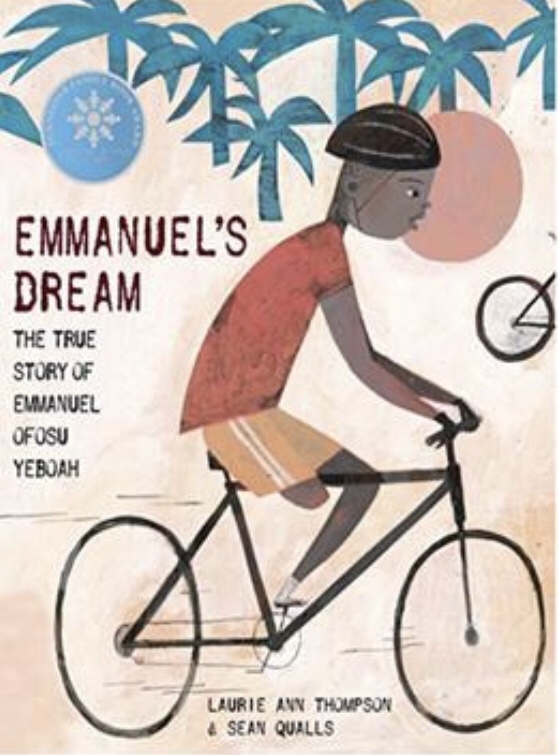
“Be respectful, take care of your family, don’t ever beg. And don’t give up.” – Mama Comfort
Emmaunuel Ofosu Yeboah is a real person who was born missing part of his right leg. Where he was born in Ghana, children with disabilities were not allowed to attend school like normal children. Emmanuel’s mother, Mama Comfort, was not satisfied with that and insisted that her son would attend school. She carried him back and forth to school until he had grown too big for her to carry. At that point, Emmanuel was determined to keep going to school so he hopped to and from school every day on his one leg.
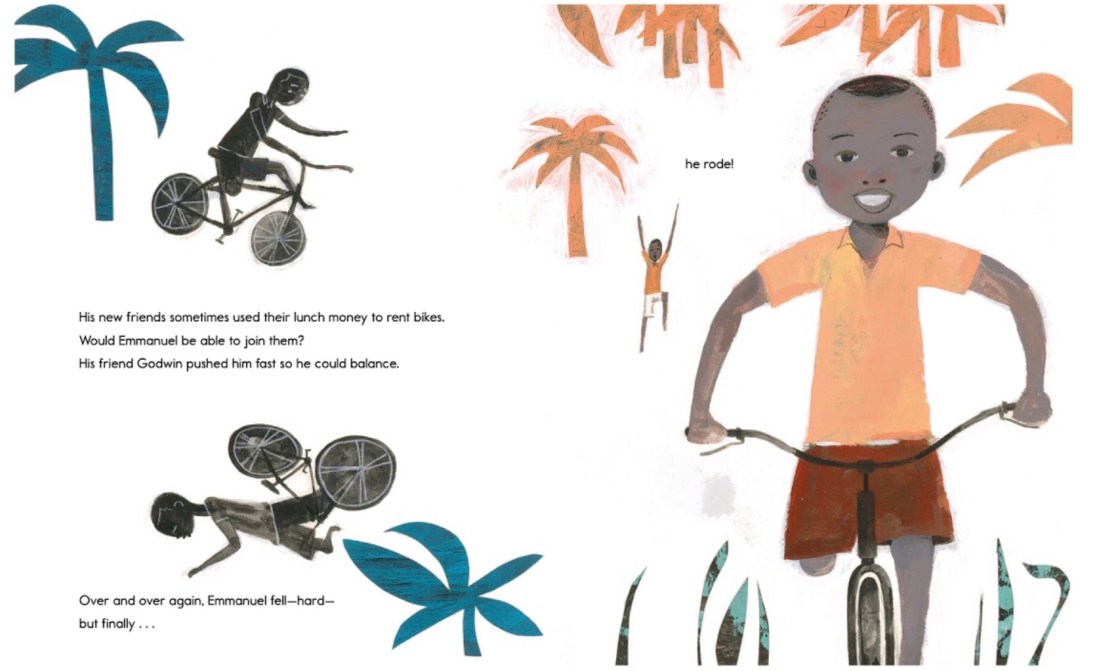
Emmanuel knew that he was different from the other children at his school, but he wanted to play with them and do the things that they were doing. He was very clever and extremely determined. Emmanuel found a way to play with his classmates and to learn to ride a bike peddling with just one leg.
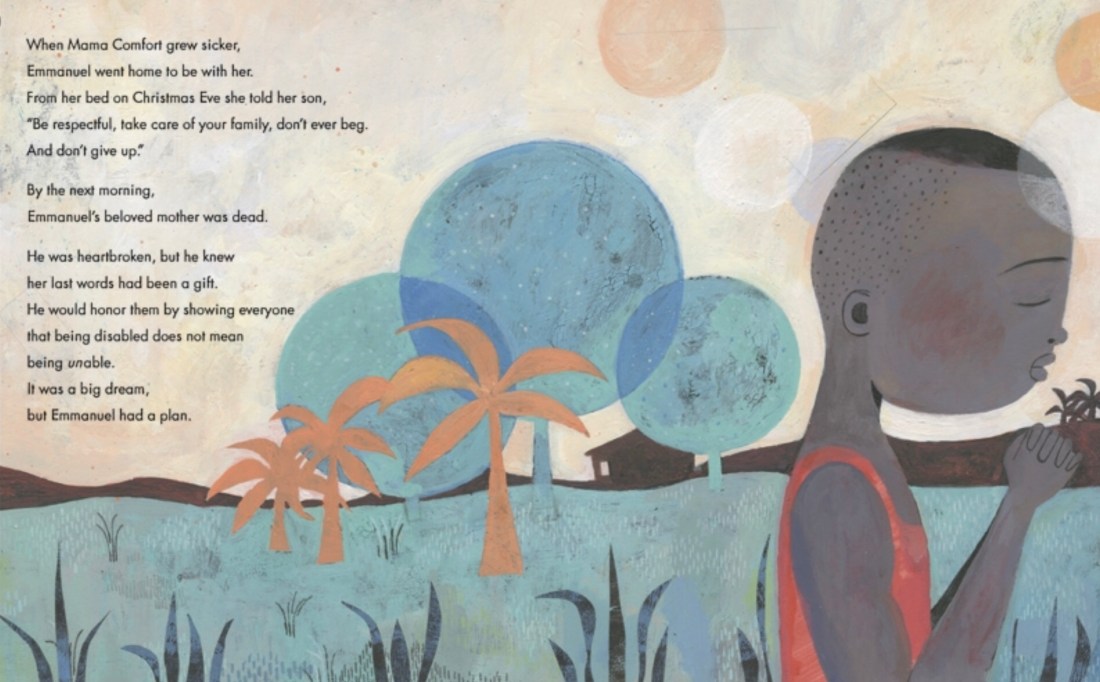
Emmanuel’s mother had great faith and was always encouraging her son to follow his dreams. Eventually the time came that Mama was too ill to care for Emmanuel and his siblings, so Emmanuel left to go to the city where he could work and earn money. Finding work was not easy as many people did not believe that Emmanuel was capable of working due to his disability. He was told by many people to go beg like other disabled people. This insulted Emmanuel who continued to follow his mother’s instructions to “Be respectful, take care of your family, don’t ever beg. And don’t give up.”
Emmanuel was gone from home for two years before he returned home before his mother died. His mother’s words and guidance continued to impact Emmanuel in every part of his life. Mama Comfort had told Emmanuel to follow his dreams, that his disability did not mean inability. He took her words to heart and went on to share his ability to persevere despite other people’s expectations of what he could not do. Emmanuel continued to advocate for his own rights as a disabled person, as well as the rights of other people with disabilities.
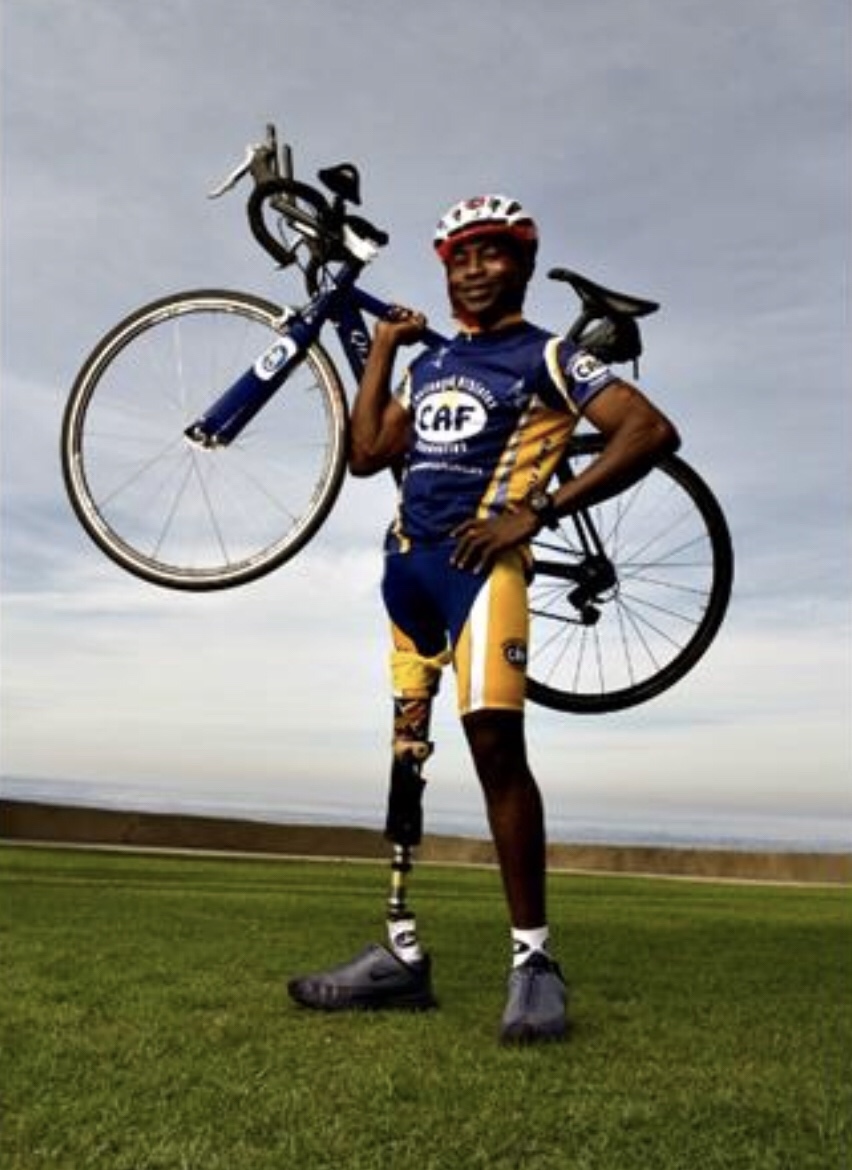
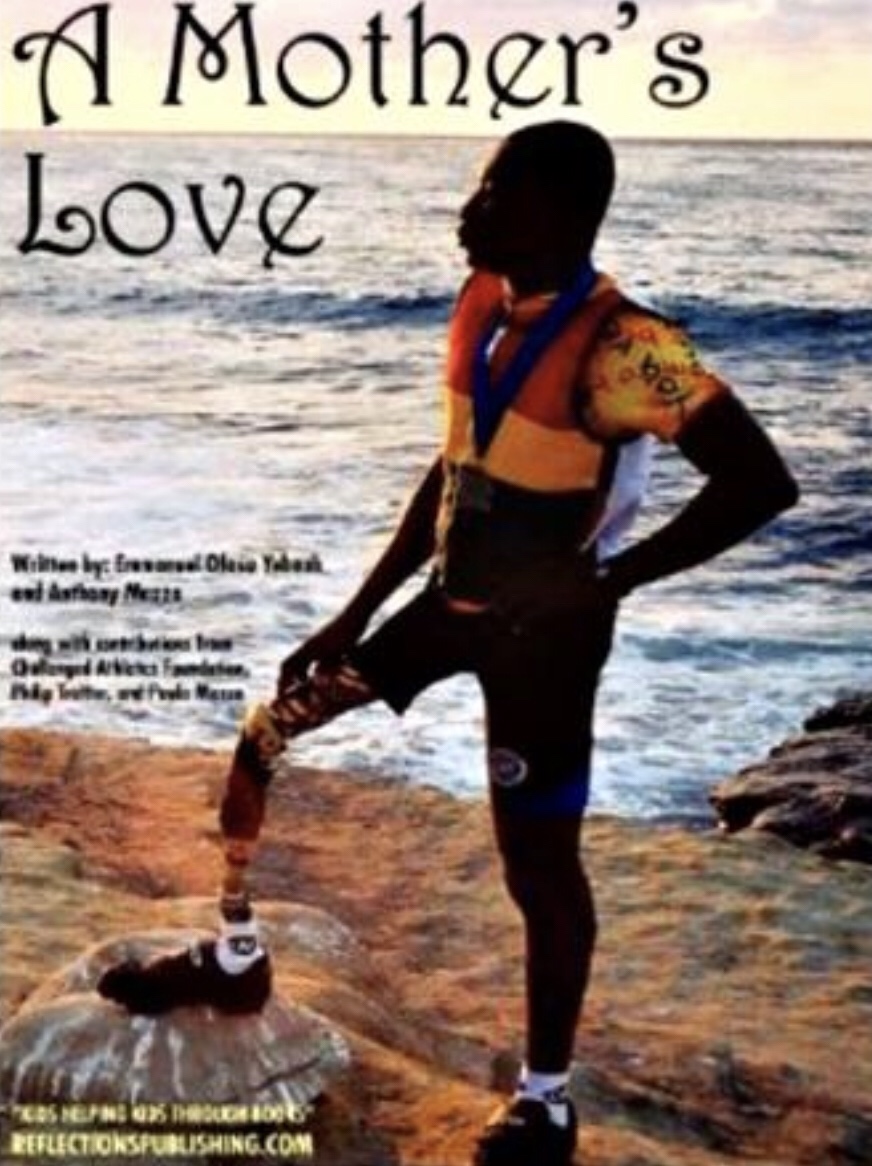
Emmanuel has been recognized for his continued work on behalf of others with disabilities. This story tells of his childhood and how to set out on the path to advocate for others. Children and adults will be inspired to learn about Emmanuel and how he followed his mother’s instructions and followed his dreams while helping others as he followed his dreams. This is a remarkable (and true) story about a young man who is a living breathing example that disability does not mean inability.
This book would make a great addition to the elementary classroom. Based on a real person with a physical disability who not only overcame that disability, but went on to do great things setting an example for people with and without disabilities this story teaches readers that where there is a will there is a way. Classrooms are made of diverse learners, and students of all different abilities make up today’s classroom. Students will be able to use this book to learn about a real person with a physical disability and how he worked to be recognized as person who should be treated as a person who is capable instead of a disabled person who should not go to school or work or do things like every one else.
Below is a video of Emmanuel, telling his story.
Ideas for Classroom Incorporation of Emmanuel’s Dream: The True Story of Emmanuel Ofosu Yeboah:
- ELA: multicultural literature, literature based on real people, connections to diversity, what is your dream and how will you make it a reality, sequence of events
- GEOGRAPHY: locate Ghana on a world map, identify the distance between Ghana and the United States, identify key facts about Ghana and the United States to compare and contrast
- SOCIAL/EMOTIONAL: identify what it means to have a physical disability, discuss the difference between disability and limitation, create a visual representation of how Emmanuel’s story can teach all people to follow their dreams
 Mrs. Kinnamore’s Bookshelf