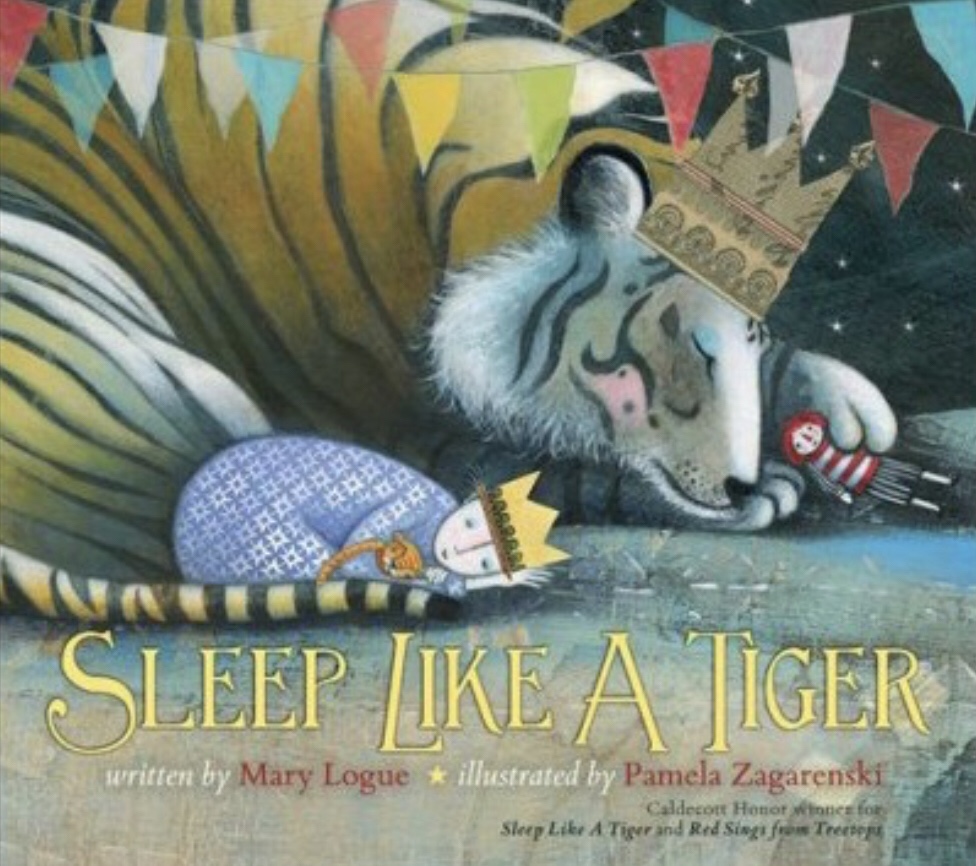
Sleep Like a Tiger, by Mary Logue and Illustrated by Pamela Zagarenski

This colorful picture book that is filled with figurative language and intricate illustrations is sure to become a classroom (or bedtime) favorite. Parents and grandparents will be able to relate to the interaction of characters in this book as bedtime has come. Children will delight in the variety of animal references and visual imagery that extends from the pages. Sleep Like a Tiger may be my new favorite children’s book!

As a parent I may have once or twice, or countless times begged my children to go to sleep at bedtime. My sons were always so creative conjuring up reasons that they could not possibly fulfill my request. Like the little girl in this story, my sons often would respond that they were not sleepy and could not go to sleep. I don’t recall my children ever asking me if everything in the world goes to sleep, but I found myself smiling as I read how the parents in this book answered their child’s questions.
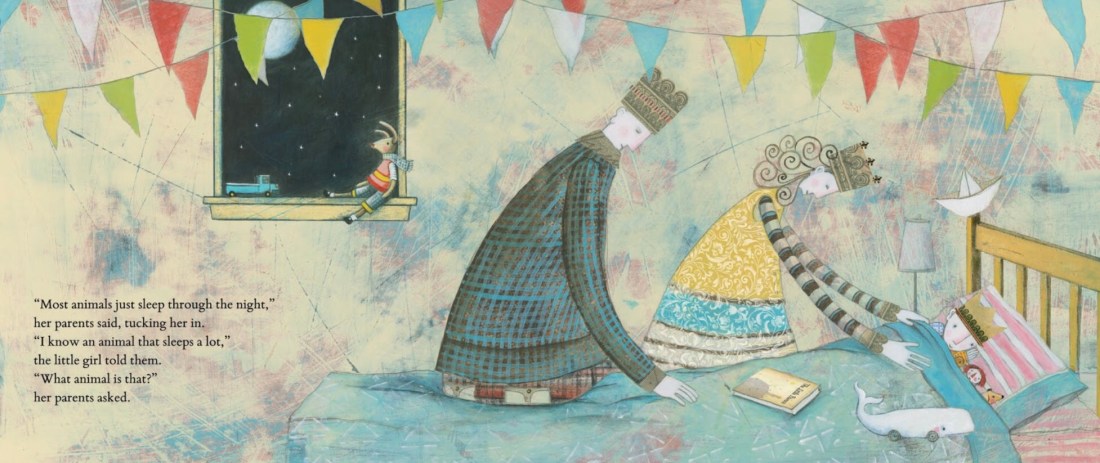
In the classroom when the lesson calls for students to learn about descriptive words and figurative language the phrase mental image or mind movie may be used. Mary Logue’s words combined with Pamela Zagarenski’s illustrations create wonderful mental images of “otters floating in a stream” and snails “curled up like a cinnamon roll inside their shells.”
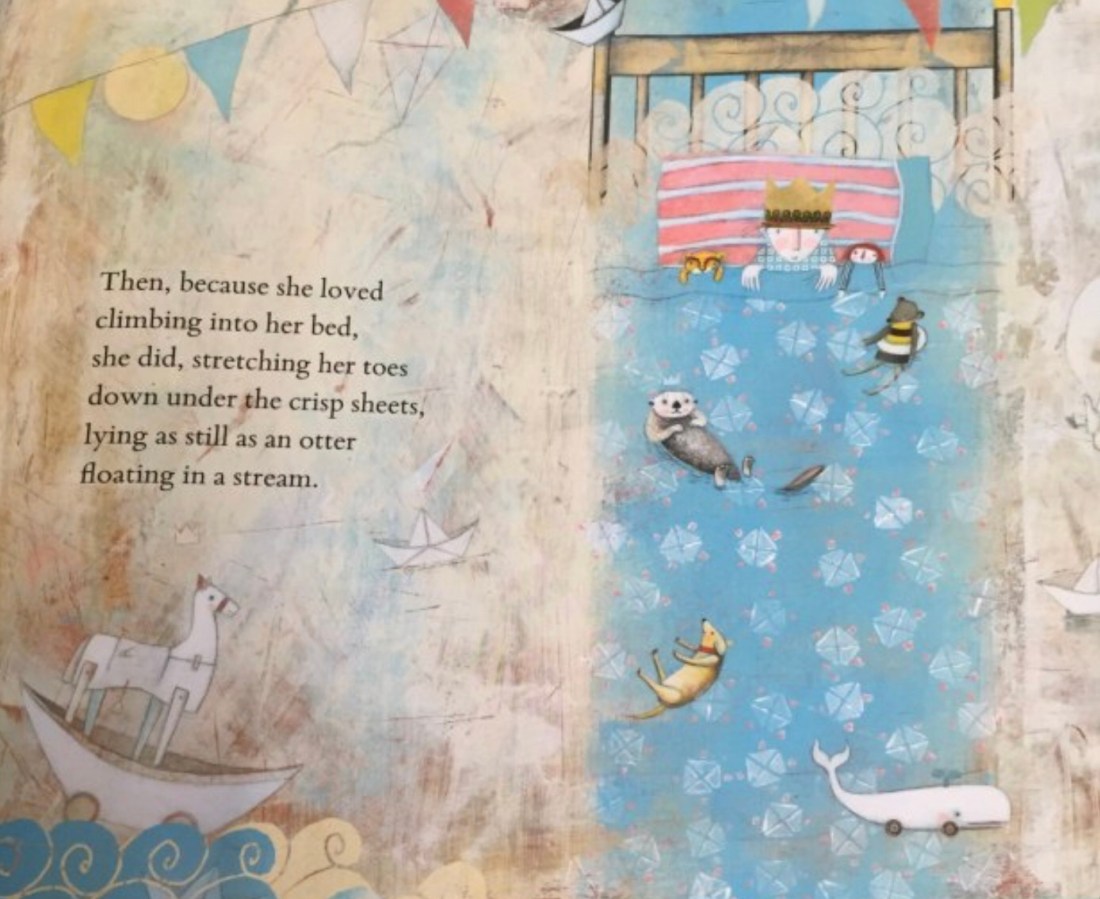
The rich figurative language used by the author invites the reader to explore using unrelated words to define and describe ordinary objects. The use of metaphors and similes draws connections that make sense. The illustrations provide a glimpse of what those connections might look like if they were literal. Sleep Like a Tiger encourages readers to imagine what it is like when it is time to sleep for animals…and children alike.
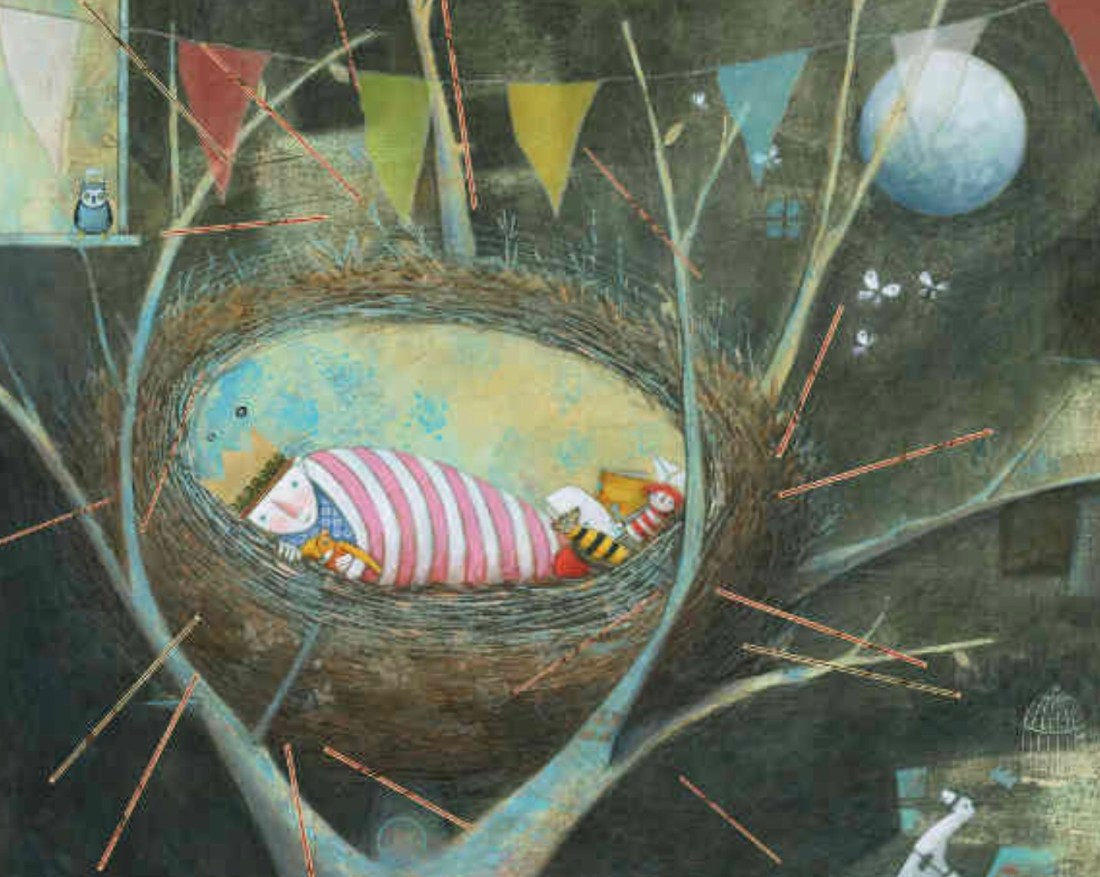
Perhaps my favorite line and illustration from this book come when the author describes the little girl’s bed, a cocoon warm and cozy.
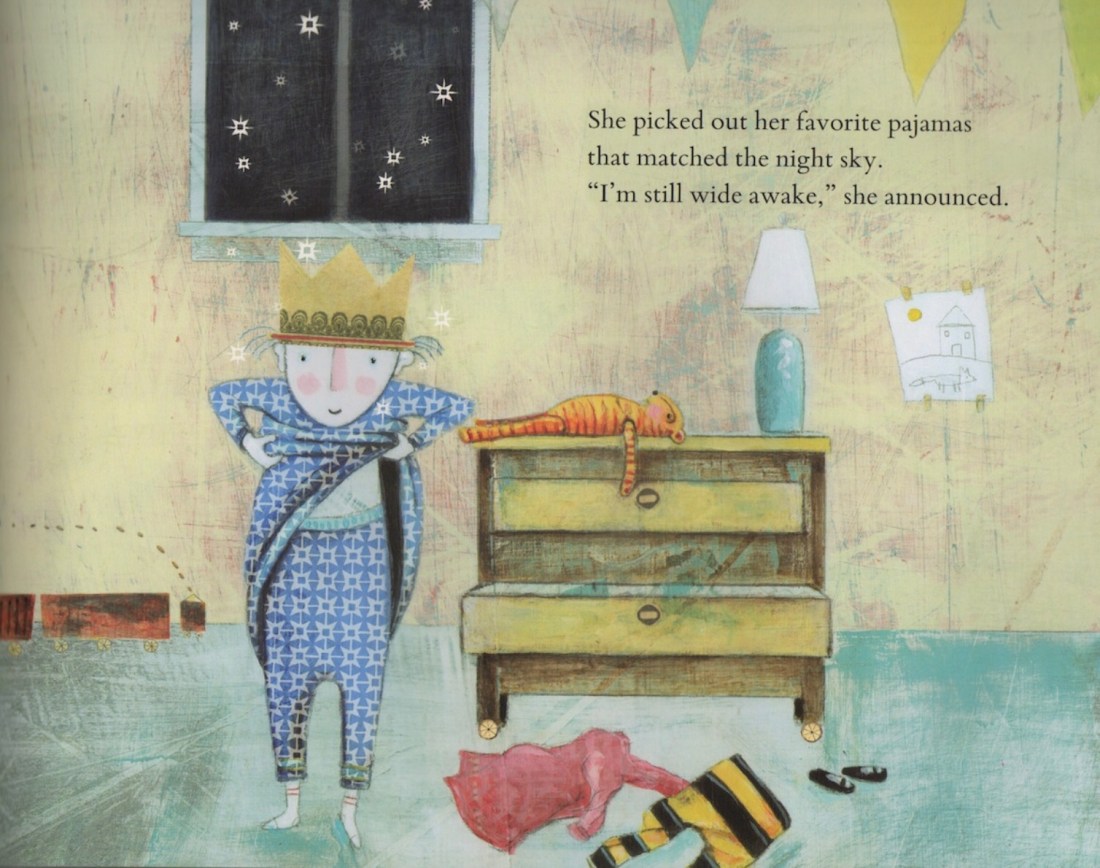
The picture book is filled with detailed artwork that lends itself to a classroom picture walk with young students. Even students who are pre-reading or emergent readers will find the illustrations a treasure trove of colors and images. The image above is both simple and detailed at the same time. Children who may not be able to read the words yet, will quickly recognize what is happening in this picture and be able to make predictions and draw conclusions based on the illustrations.

Although this book may be best suited for primary students, I love the idea of bringing this book into the intermediate classroom to reinforce lessons in figurative language and extend or introduce science lessons about animal characteristics. I would ask my students, how do animals sleep? This book could be used as a resource to excite and interest students prior to selecting an animal to research and write about. The value of this book in the classroom is deep and wide.

Ideas for Classroom Incorporation of Sleep Like a Tiger:

  • ELA: figurative language, descriptive words, imagery, visualization, metaphors, similes, picture walks, author/illustrator studies, text features

  • SCIENCE: animal characteristics, phases of the moon, healthy habits – sleep
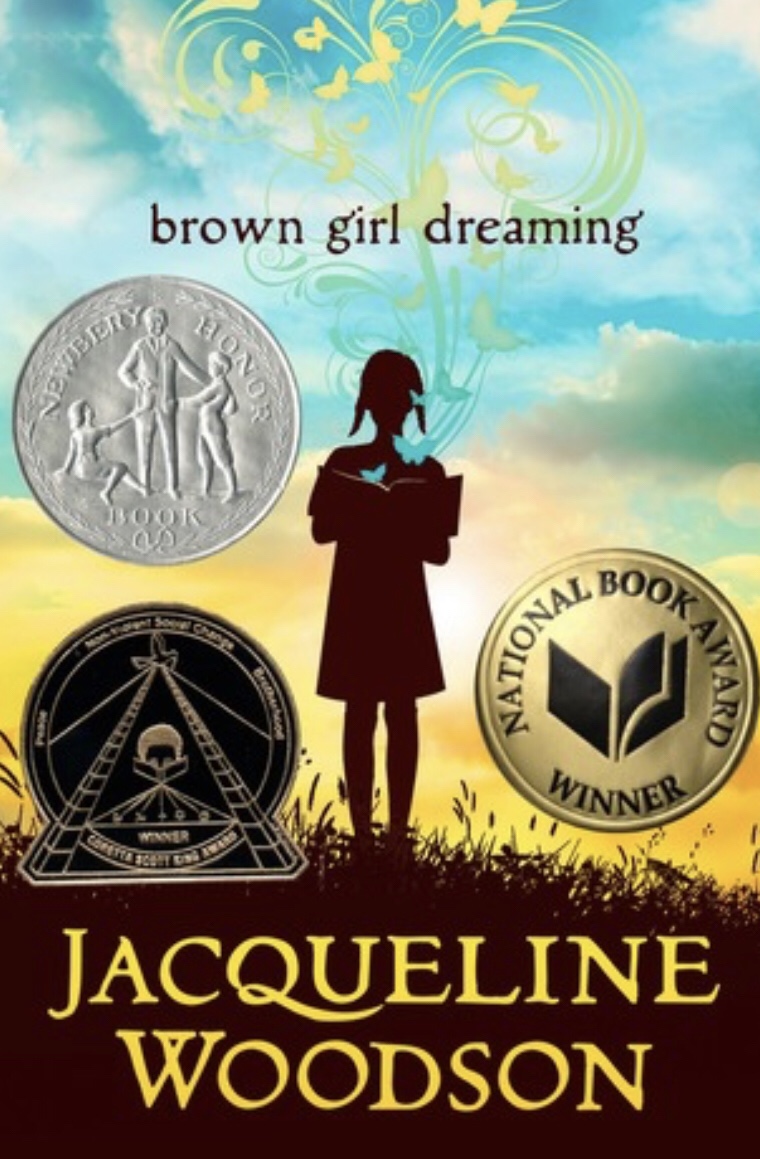
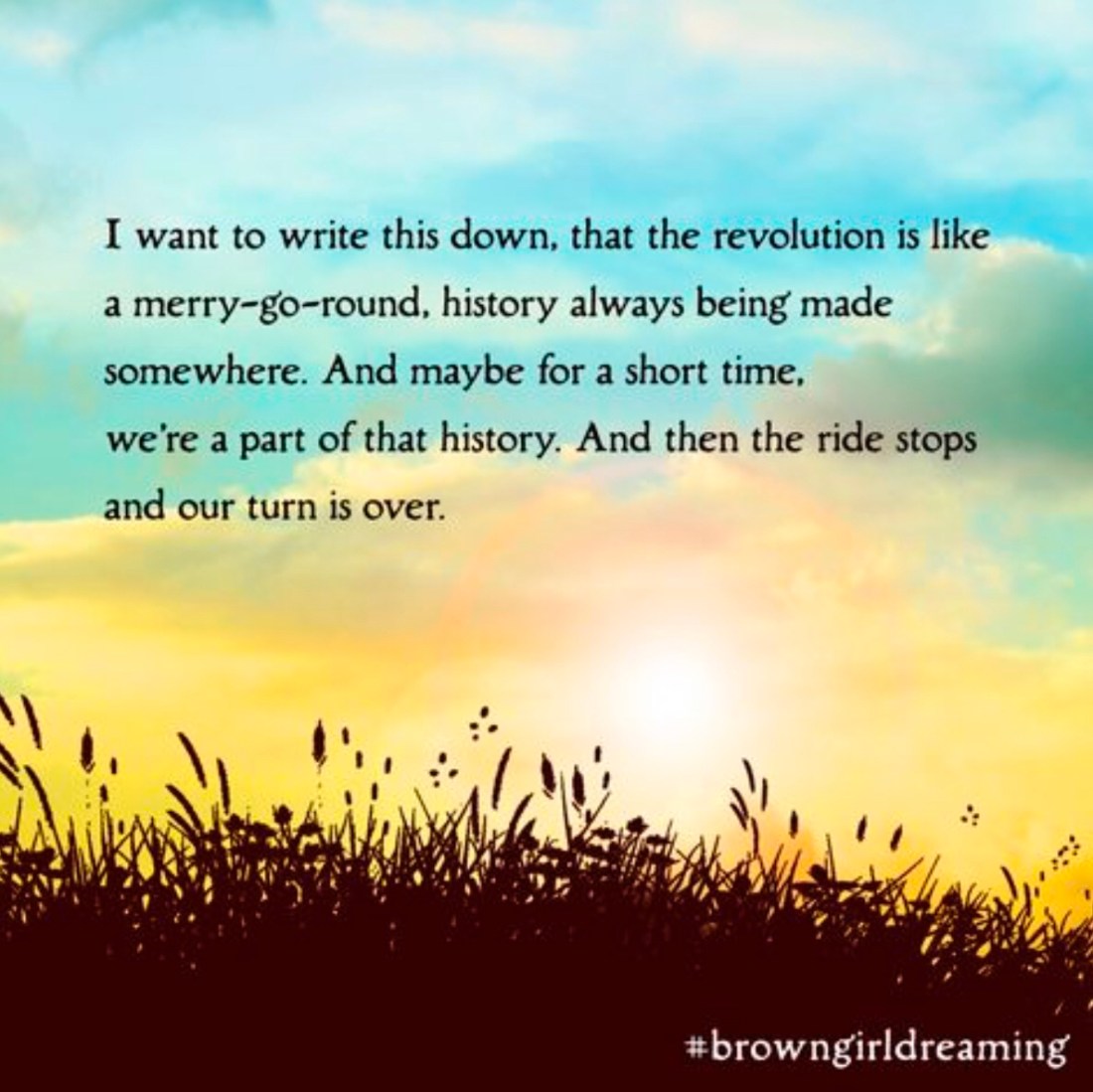
Brown Girl Dreaming, by Jacqueline Woodson

This young adult book takes readers on a journey back in time as author Jacqueline Woodson recalls her own life as an African American child growing up in the United States during the Civil Rights movement. Written in verse, the book connects the reader to young Jackie as she recalls her family life, her church life, her school experiences, and her own story told by the one who knows it best.

As the book begins, readers learn about the story of how Jacqueline Woodson was named when she was born. Names are important when we begin to tell the story of who we are. In this story it lays the foundation for sharing not only about the author, but about the family that was woven in to the tapestry of her life. Brown Girl Dreaming is an autobiography written in verse. The words are pieced together delicately, elegantly, simply.

She writes about her place in her family, how she looked like her sister but was so very different. She writes about her choice to write Jackie instead of Jacqueline, because of her struggle with the cursive Q. She writes of the separation from her mother while she went to New York, and the days and night she spent waiting for her mother to come get her from her Grandmother’s home. She writes about the rules of society, that people keeping to their own kind was both a source of friction and the accepted norm. She writes about what she thought she knew as a child, and how writing allowed her to find what she really knew.

Telling her story she shares how her teacher told her, “You are a writer” and she believed her.

Brown Girl Dreaming is not a fairy tale. It is about a real girl with a real family with real experiences and real dreams. The author does not inflate or diminish her story to create a more appealing version for the reader. What she does do is recall her own memories and story by retelling her story in her own words in her own way.

I purchased this book as an audio book and listened to the author read her story as though I was eavesdropping on a private conversation. Jacqueline Woodson is a remarkable story teller, but not in the fantastically superficial way that I have come to expect when describing a story teller. I enjoyed the simplicity of this book, and all the ways I was able to find myself connecting to her story even though culture and society screams that I should not be able to because she and I are different. We are different. Yet, I found over and over again bits and pieces of her story that I could and can relate to as I listened.

As a teacher, I can absolutely see using this book in the classroom and recommending it to my students and colleagues. So often we teach and learn about the famous people involved in pivotal moments of the civil rights movement without hearing the deeply personal impact in the everyday life of so many. Jacqueline Woodson brings her culture, her history, and her story to the talking table with this book. I believe that students would find her style of writing intriguing as she writes as though she were speaking to a friend. The connections written about in this book could extend beyond English Language Arts and Reading to history and social studies. This book opens up many possibilities for students to explore writing their own story in their own way.

We all have a story to tell. Brown Girl Dreaming is the story of Jacqueline Woodson in her own words written in her own way. And, it is beautiful!

Ideas for Classroom Incorporation of Brown Girl Dreaming:

  • ELA – genre, autobiography, writing style, poetry, personal narrative, text to self connections, story mapping

  • HISTORY – the Civil Rights Movement, Langston Hughes, Jesse Jackson, Ruby Bridges, Rosa Parks, Greenville, NC
  • GEOGRAPHY – 50 states, New York City, North Carolina, Ohio, map skills, city map of New York City and it’s districts
  • MATH – figuring distance between two places, budget, cost of living

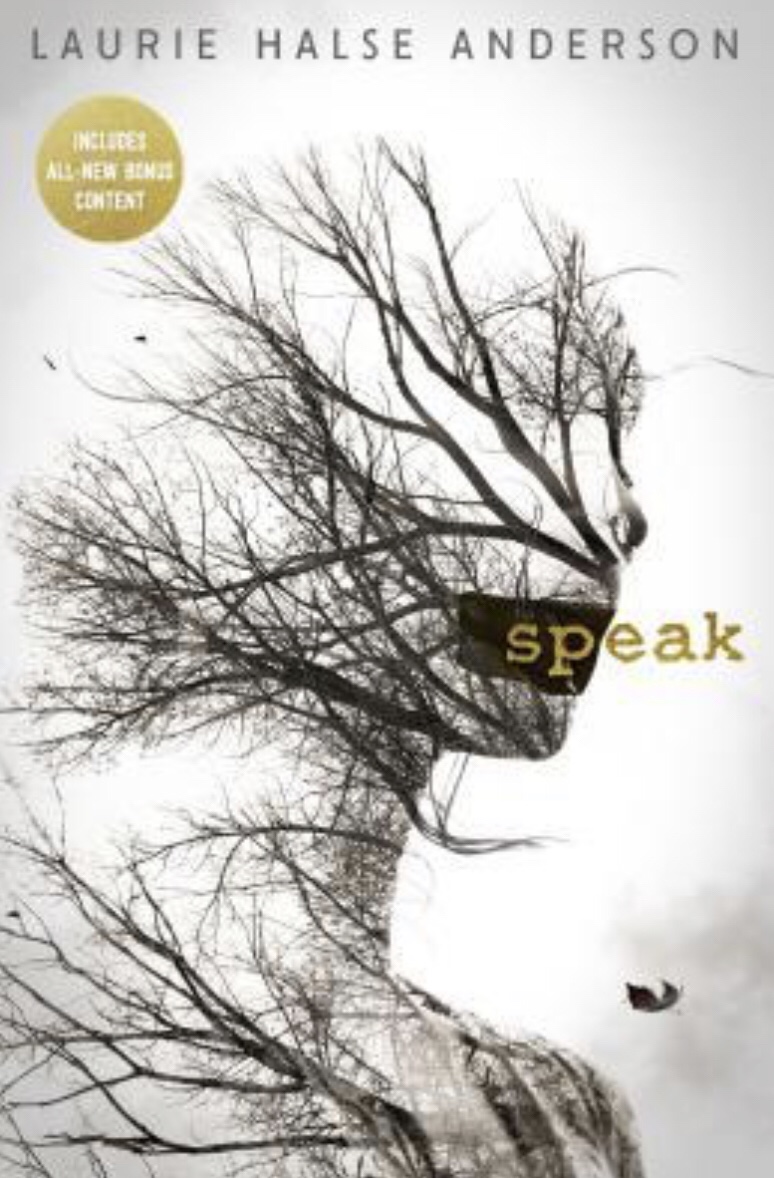
Speak, by Laurie Halse Anderson

This young adult novel addresses the impact of sexual trauma and how one freshman student tries to navigate life after rape. This very real topic that has become a part of too many lives is brought to the forefront of the conversation as the main character Melinda Sordino struggles to find her place in her high school community after the event that changed everything.

This book was a new read for me and the topic and cover art intrigued me. Author Laurie Halse Anderson tackles the painful topic of sexual assault in this young adult novel. While this topic makes people uncomfortable – and silent, Anderson brings this conversation forward using the voice of the main character Melinda. As a female adult, I have experienced high school and all the typically teenage challenges that range from school culture, student groups or clans as named in Speak, and the emotional roller coaster of finding my own feet. Now imagine compounding all of those challenges with the addition of a life altering trauma. Narrated by Melinda, readers hear what this freshman is thinking as she moves forward returning to school with a new reputation and tainted perspective.

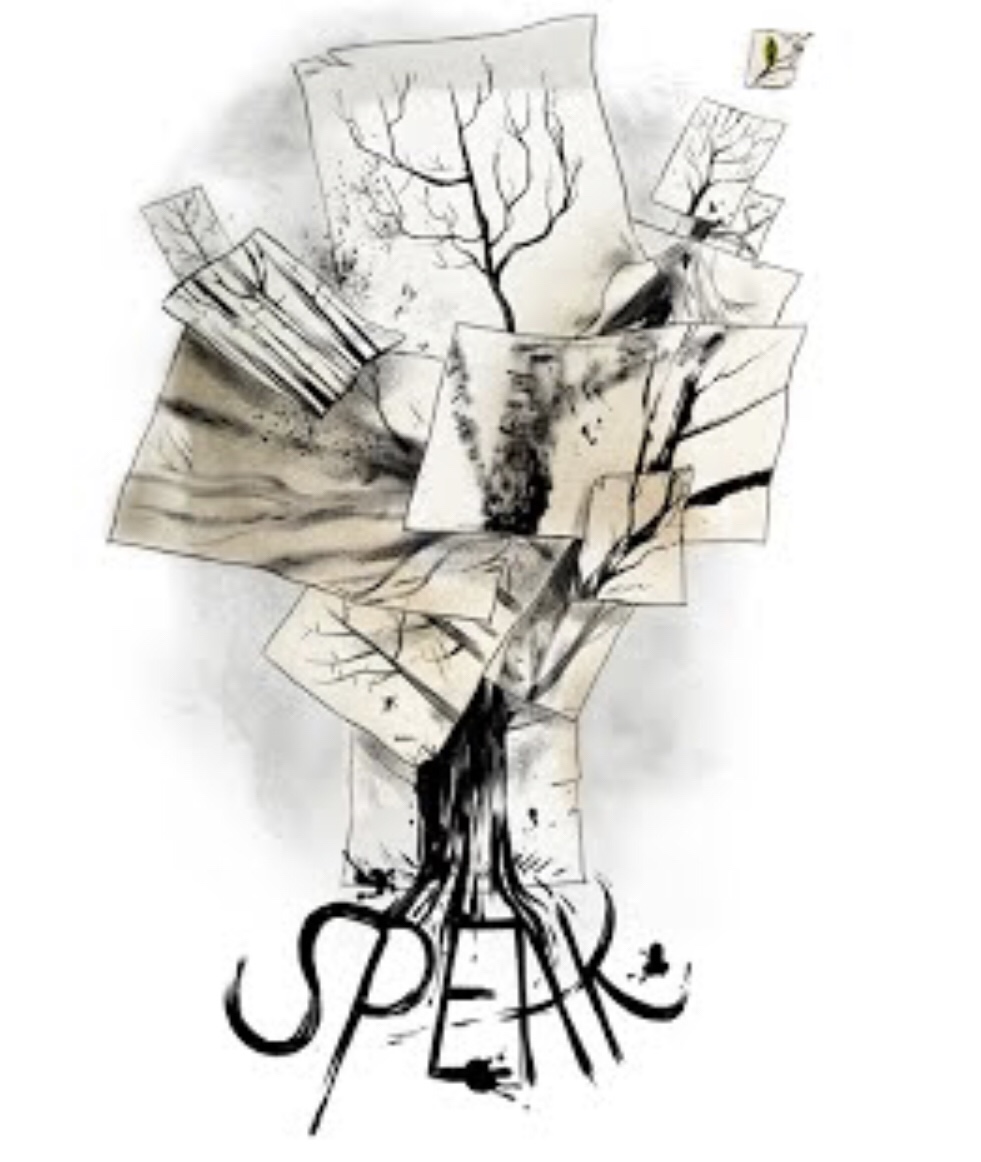
Melinda tries to become invisible in her high school and finds an outlet in the year long assigned art project to transform a tree into an object that makes a statement. Just as Melinda’s friend Ivy describes Melinda’s art as scary, the kind of scary you don’t want to look at for too long, Speak opens up a delicate topic by looking at the person behind the trauma. Melinda is more than a victim, and one event should not and does not define who she is.

There is power in the ability to speak your own truth. This book tackles a topic that too often is not spoken about. While describing the topic as sensitive, controversial, and delicate we still avoid calling it by name. Laurie Halse Anderson puts into words what so many cannot, or have struggled to verbalize.

As a teacher, I appreciate the value of this book and the story that unfolds from it’s pages. I can also admit that it would make me very uncomfortable using it in the classroom. Defensively I will say that I believe my students are too young, or that the topic is too mature. Honestly I know that students endure trauma of all sorts and it the very things that make common society uncomfortable need to be addressed in a way that allows our children to heal and move forward.

After reading Speak, I would suggest this selection for 8th grade classes and above. The content invites students and teachers to make connections to the text to extend personal and academic growth. This age group is preparing to enter the highly social realm of high school and all that that entails. They are aware of mature and sensitive topics, and they are still bold enough to speak up and speak their minds.

Ideas for Classroom Incorporation of Speak:

  • ELA – symbolism, point-of-view, inferencing, expository writing, vocabulary, summarizing, visualization
  • Social/Emotional – personal trauma, social interaction, school culture, behavior, reporting procedures, community resources

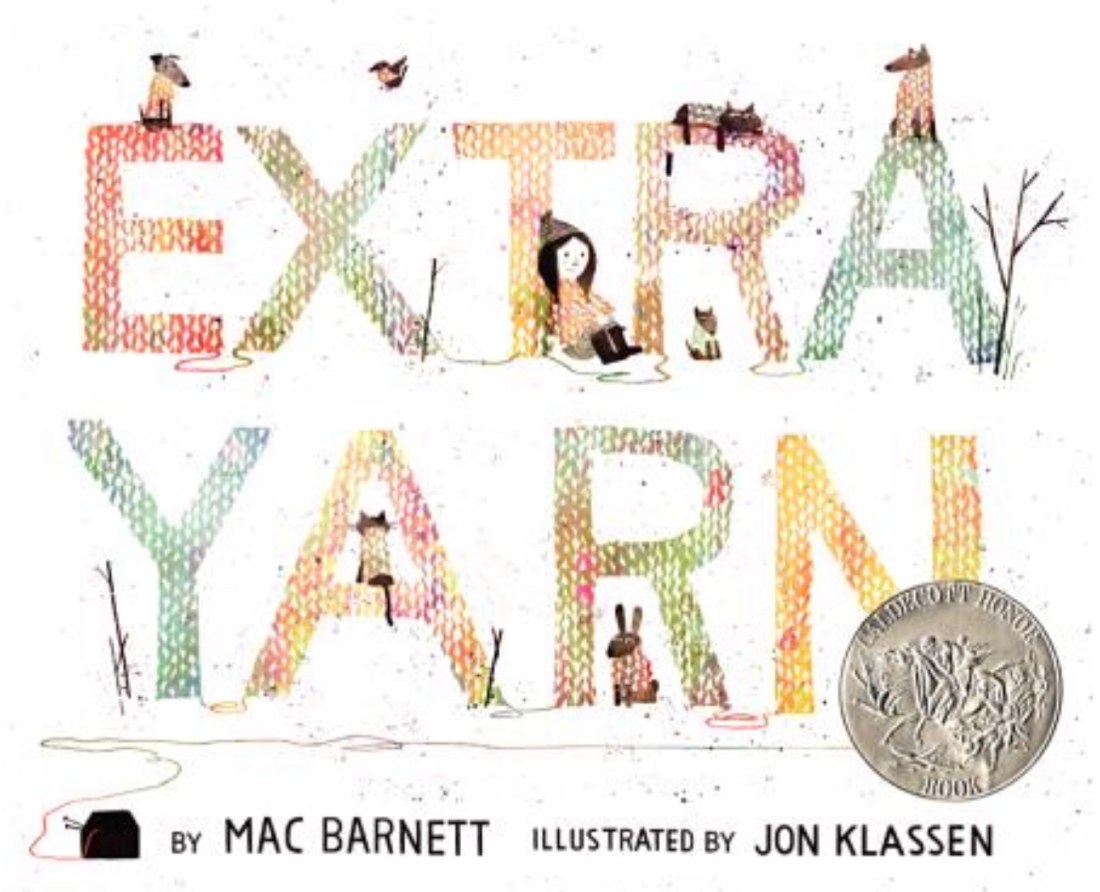
Extra Yarn, By Mac Barnett

I have to confess, I selected this book because of my own love of yarn. As someone who learned to crochet as an adult, I gladly admit I can never have enough yarn!

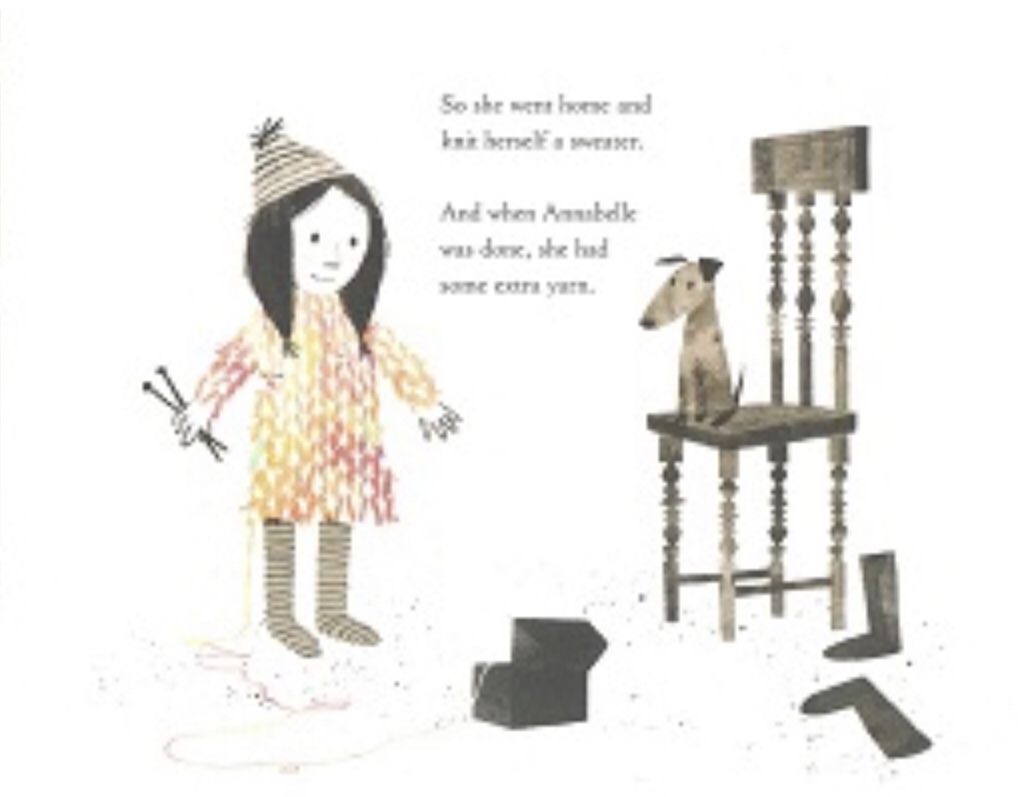
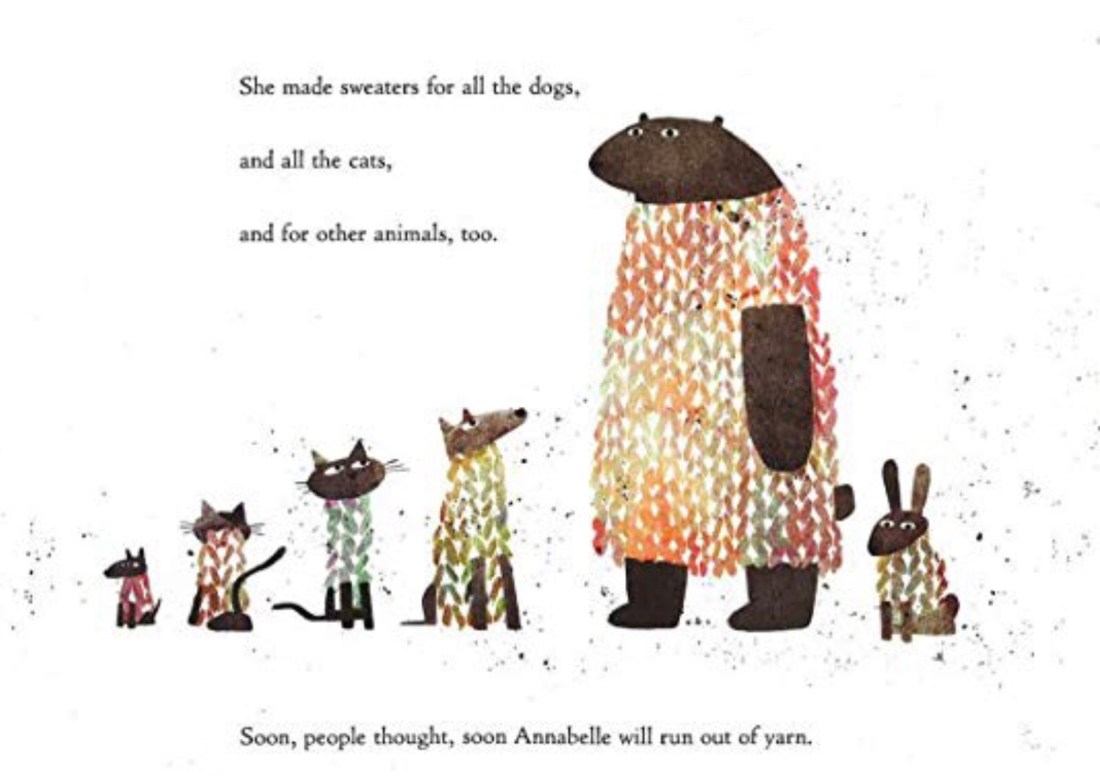
This picture book features young Annabelle, who finds a box of yarn that just keeps giving. Annabelle begins by using the yarn from the box to create sweaters for herself and her dog and quickly finds that the yarn supply does not diminish as she shares with her family and friends.

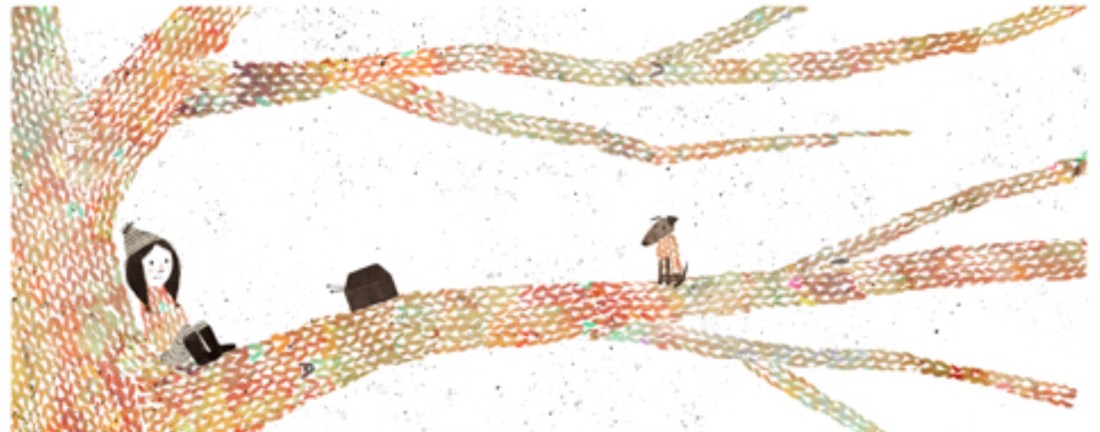
The pictures are simple, yet effective as the author weaves in a heartfelt theme of giving. This is a story I would chose to use in my classroom for students to learn theme. As Annabelle continues to give without asking for anything in return, her box of yarn continues to stay full. That is a powerful message for students to learn about what it means to share freely without an expectation of getting something in return.
Of course, along the way she did discover that not everyone shared her giving heart. That is a reality that students already know – sometimes people have ulterior motives that are not nice. How did Annabelle handle it when someone wanted her box of yarn? She handled it gracefully and discovered that in the end, everything worked out pretty well.
Ideas for Classroom Incorporation of Extra Yarn:

  • ELA – theme, figurative language
  • Social/Emotional – self-control, kindness, stealing, generosity
  • Math – measurement, infinity (vocabulary)

Welcome!

The more that you read, the more things you will know. The more that you learn, the more places you’ll go. – Dr. Seuss

I am an Elementary Special Education teacher working towards a Masters in Reading. This blog has been created to highlight some of the books I am reading along the way. Thank you for visiting! I hope you find a book (or two) to enjoy with your children.

~ Mrs. K