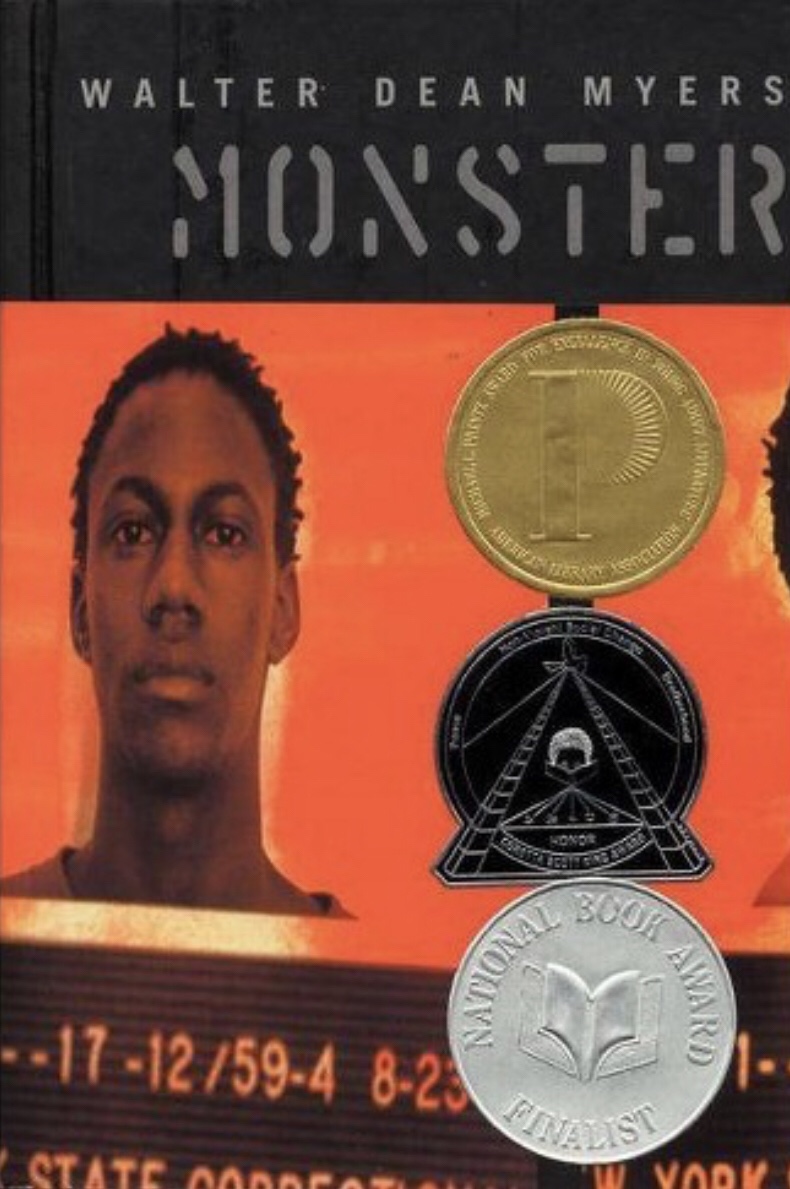
A murder trial, a sixteen year old, and a label from the prosecuting attorney that seems inescapable. She called him a Monster. Her job is to convince a jury that he is responsible for the actions that occurred leaving a drug store owner dead. Did he pull the trigger? No. But he is accused of participating in criminal activity that resulted in the death of a man. That makes him the worst of the worst, right? That is what makes him a Monster.
This book by Walter Dean Myers introduces the reader to Steven Harmon, a sixteen year old high school student on trial for murder. Steven is the one telling the story and the memories that replay in his mind as the trial unfolds. As an aspiring film-maker, Steven uses the dire circumstances he is in to write his perspective as the defendant in the murder trial. Although he is still a high school student, his personal associations and poor choices led him to an adult arena facing legal consequences that he never imagined possible.
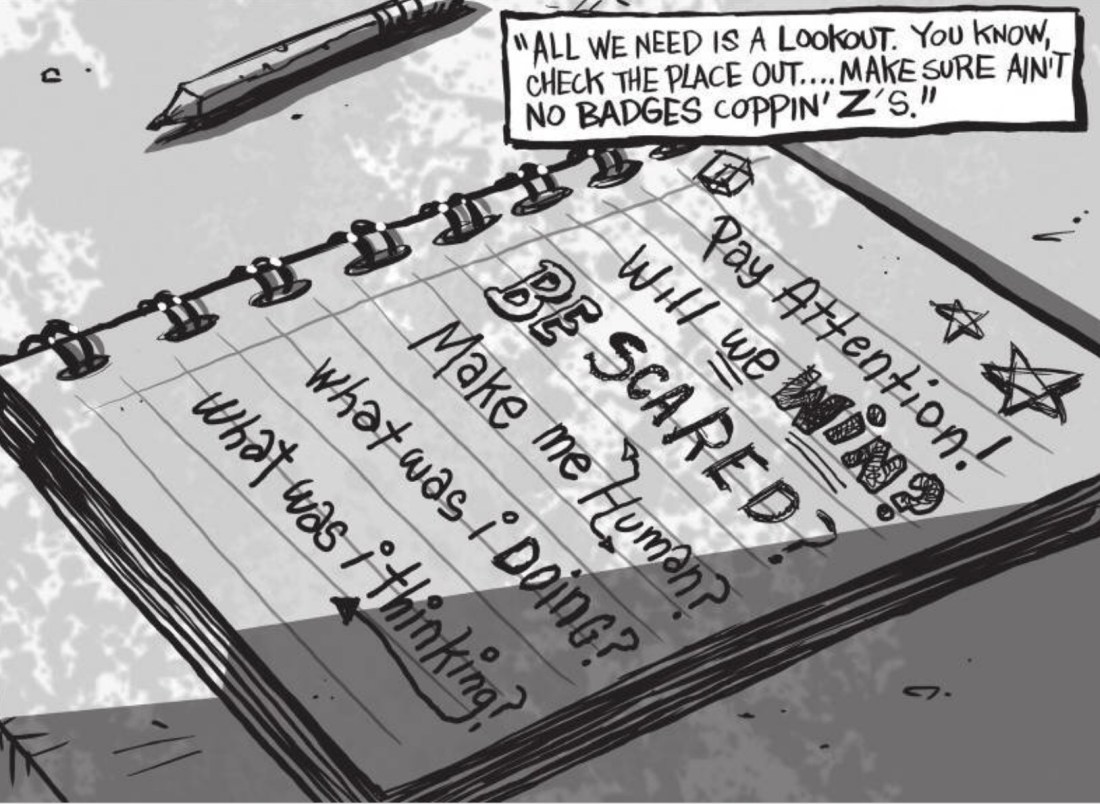
Throughout this book, Steven Harmon records the events he is living out in a notebook that is the first draft of sorts of what might be a film version of the events that led him to and through the murder trial. His inner monologue explores what he perceives the people around him are thinking as he records their actions and reactions to him and his current situation. From his defense attorney to the witnesses in his case, from the co-defendant to the judge and jury members – Steven records what each character is saying and how they react as though he is directing a film about someone else’s life. But it is not someone else’s life.
It is his own life.
It is his own trial.
It is him who is being called a Monster by the prosecuting attorney, and it is him who must rely on the judgement of the jury members to determine whether or not they believe he is guilty of murder or set him free.
Whatever the outcome, his life will never be the same.
What’s done cannot be undone.
What happens now? Where will he go from here?
At sixteen years old he is not even old enough to be a visitor to the prison where he now waits on trial. The irony of the seriousness of his situation is unbelievable to him at times, and yet it is happening and must play out in a court of law.
This thought provoking book cuts straight to the point of a very serious and life-changing event that changes not one, but several lives in the blink of an eye. This book would be best suited upper middle school or high school students who are close to the same age as the main character. While this story is not based on a specific true story, the author did research by visiting with prisoners and asking them to tell him their story. No one plans to be in jail at sixteen years of age. No one plans to be on trial for murder at sixteen, either. But in our current society, these types of situations and circumstances do happen all too often. Young people act without thinking, and live with a belief that nothing bad will ever happen to them. This story is written in a way that can open the discussion about making good choices, and being responsible for the consequences of personal actions.
While I believe there are many possible uses for this book in the classroom setting, I believe that I would choose to use this book to teach point of view, vocabulary, making predictions, and symbolism. I believe the reader will be hooked on the storyline and will be kept interested in the story by the characters who each play a role in how Steven views what is happening to him throughout the trial. Readers will want to continue reading to find out for themselves whether or not the jury returns a guilty verdict. Will he face the next 25 years or more as an inmate? Or will the jury find him not guilty so he can return to his life as a want to be film maker? Is it possible for him to return to his life the way it as before the drugstore owner was murdered? What happens next? The author provides just enough information to answer the big questions, but leaves lots of space to think about how things have the potential to wind up so much differently.
Ideas for Classroom Incorporation of Monster:
- ELA: making predictions, finding text references, vocabulary, character perspective, point of view, symbolism
- Social/Emotional: making good choices, associations, consequences, labels
- HISTORY: judiciary process, legal responsibility, due process

 Mrs. Kinnamore’s Bookshelf
Monster was a great read and social problem we still have in today’s society. We judge by the color of their skin if they are guilty or not before we even are presented with evidence. The trial was long and hard but his journals gave us great insight to his thoughts and beliefs. Your ideas on how to use the book inside the classroom are awesome and spot on! Great job!
LikeLike
You have very good ideas for the classroom. This book sounds very interesting to read, it is on my list of future books. A mock trial might be a good idea for the classroom as well, or a debate. Of course, guidance will be needed so everyone is treated with respect.
LikeLiked by 1 person
I like the idea of a mock trial, or debate!! That would be great!
LikeLike