Unwind, by Neal Shusterman

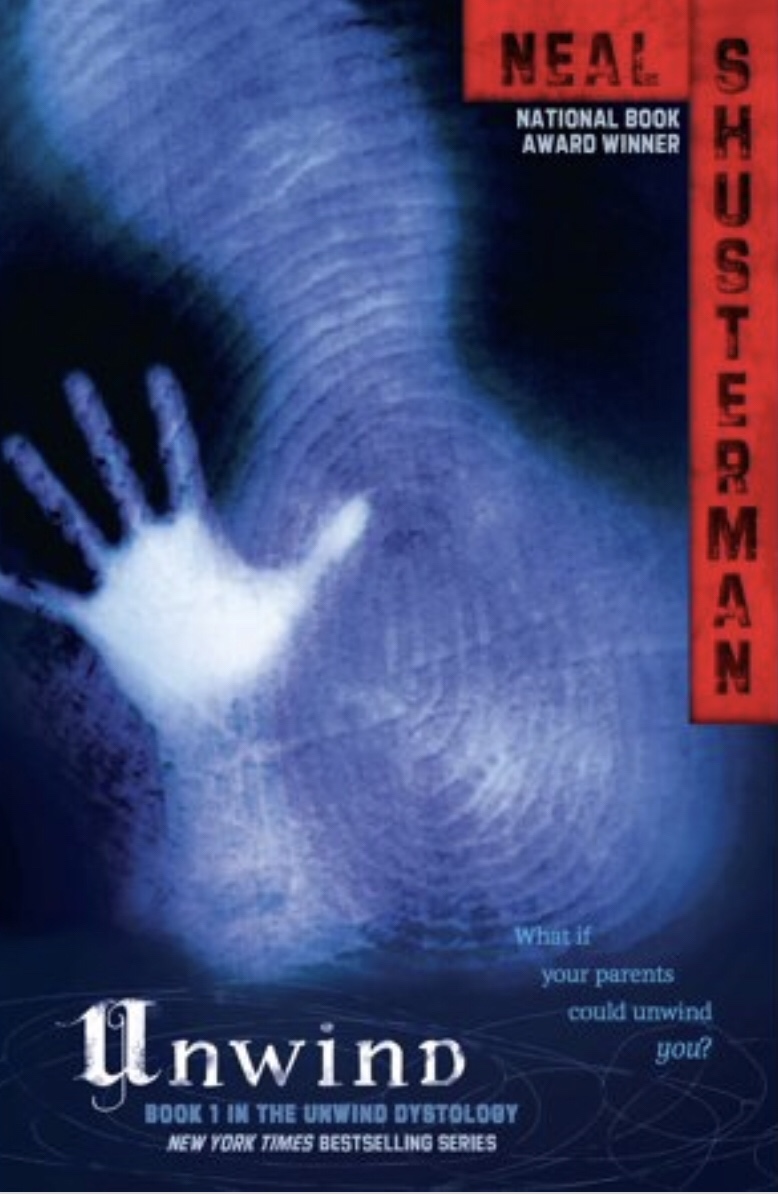
What are the potential possibilities when the concept of harvesting divided bodies for their parts becomes part of the lawful state? Who is safe? Is it possible to be an Unwind and still continue to live? Who decided this plan was a good idea? And why doesn’t anyone make it stop?

In this young adult novel, Neal Shusterman takes the reader down a dark and disturbing road to a time when teenagers are marked to be unwound. To have their organs harvested for the benefit of those more desirable than the terribles who will be taken apart piece by piece. What about the Unwinds who are thrust into harvest because of family beliefs that it is the responsible thing to do? These teenagers who are donated, or tithes as they are called, are groomed to believe that their lives have a higher calling because they were fulfilling their destiny to help their fellow man by donating their healthy body parts to those who would transplant or graph them to a person in need.
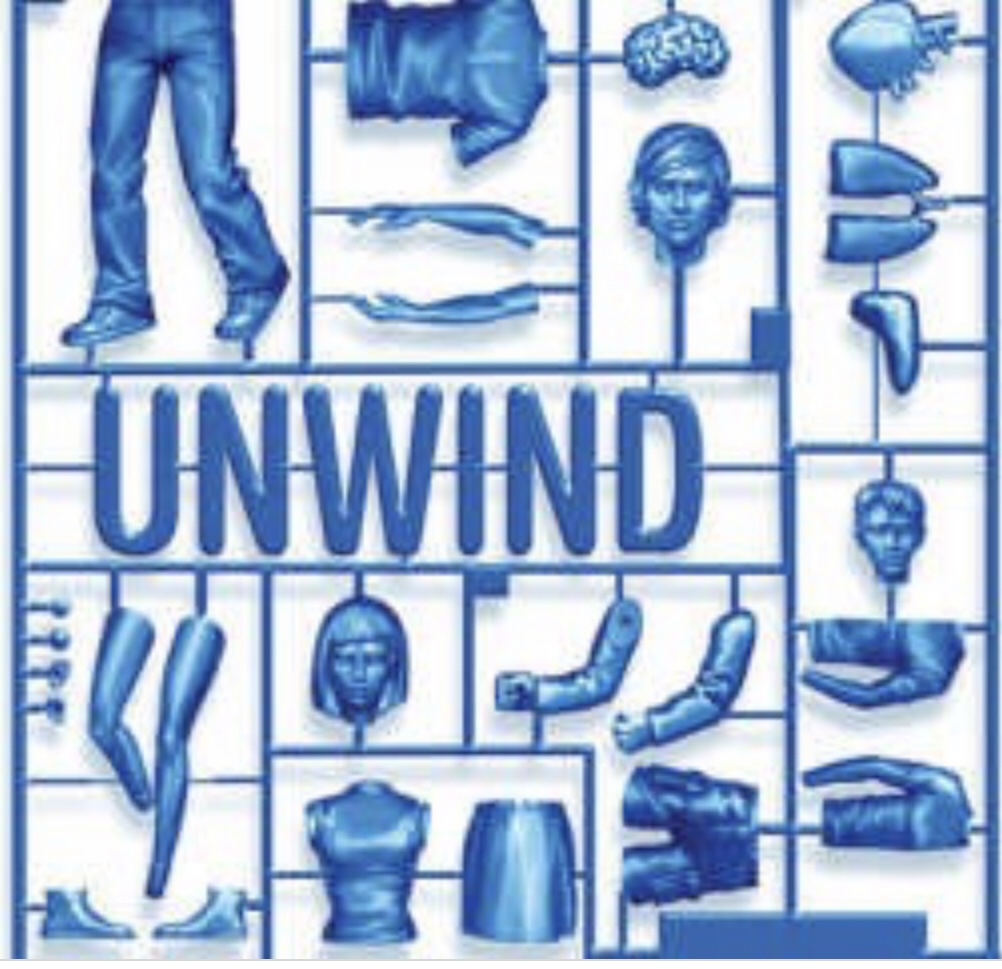
In this dystopian society, the practice of unwinding is completely normal and everyone has a role to play. You are either an Unwind, or you are someone who remains eligible to receive organs or other body parts because you have positively contributed to society and your community. As an Unwind, you will not benefit from the removal and transplant of your parts – but the law promises that you will be left alive. Harvesting body parts and organs is not intended to kill a person, it is just intended to extend or improve the life of others.

As a teacher, this book presents so many different conversation starters for the classroom. The connection to current events, ethics, morality, justice, fairness, human rights, symbolism, characterization, tone, and perspective are just a handful of ideas that come to mind after reading this book. There are main characters, who each present a different journey to being an Unwind. A girl and two boys who readers follow throughout the story as they encounter many more secondary characters who directly shape and potentially shift how the reader feels about each character. There are characters for readers to love, and some to hate. Each one bringing additional depth to this book that has chilling references to current events and places that the readers will recognize as real in our everyday world.

Being an elementary school teacher, this book is outside of what I would normally select for classroom use for my students. I cannot deny that I believe some of my previous students would be interested in this book for the shock and chaos elements that make up so much of the complex storyline. I would recommend this book for upper middle school, or high school students based on maturity and exposure to complex concepts – their developmentally appropriate ability to separate fact and fiction.

Personally, I am still not sure I can say whole heartedly that I liked this book. But – I am definitely intrigued about what happens next. This book is the first in a series by Neal Shusterman and it was a book that once I began reading I wanted to stop but couldn’t stop because I was compelled to know what happened next. I have talked about this book to everyone I spoke to this week. Like it or not, it absolutely held my attention and made me think!

Ideas for Classroom Incorporation of Unwind, by Neal Shusterman

  • ELA: have students write their own Bill of Life, write an argument for or against unwinding, debate unwinding, create character webs identifying internal and external traits for 1 main and 1 secondary character, create a trailer for the prequel of Unwind that explains how and why unwinding came to be
  • SCIENCE: (biology) anatomy
  • ECONOMICS: budgeting, how to financially support yourself – your family – an underground community in the dystopian state, establish financial rules for different elements of society
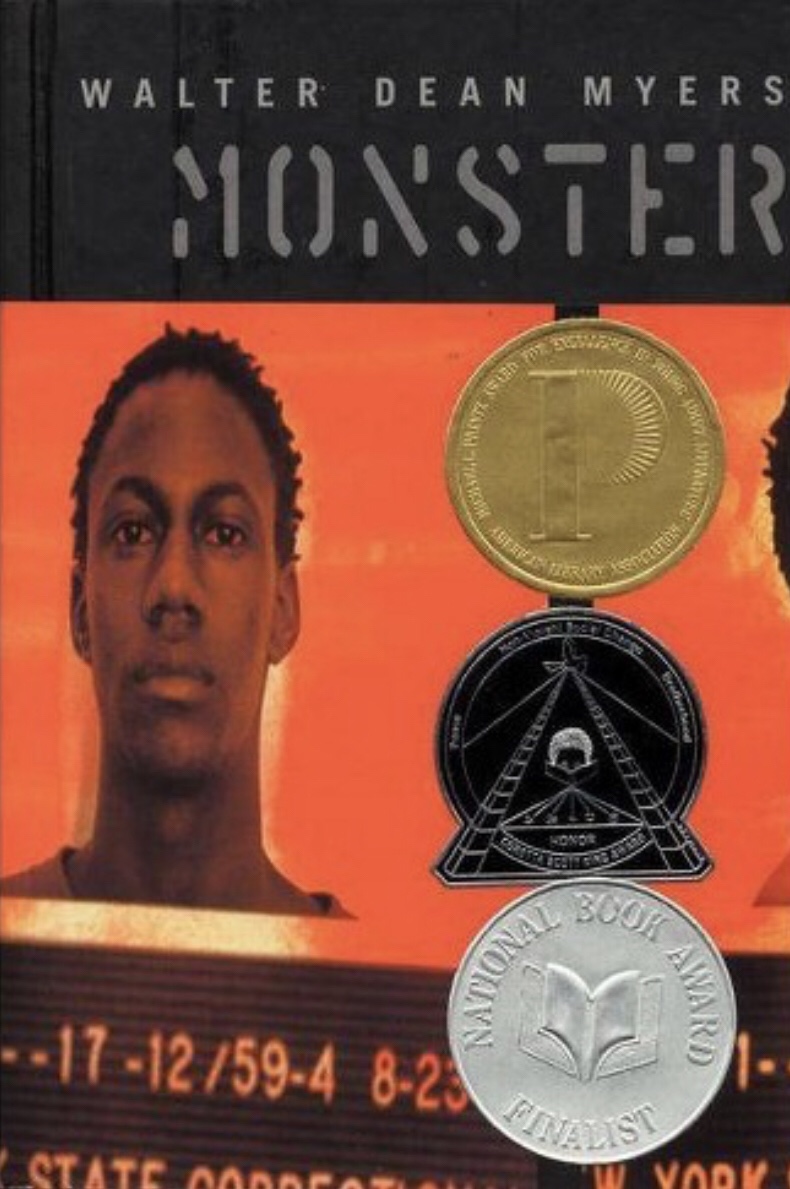
Monster, by Walter Dean Myers

A murder trial, a sixteen year old, and a label from the prosecuting attorney that seems inescapable. She called him a Monster. Her job is to convince a jury that he is responsible for the actions that occurred leaving a drug store owner dead. Did he pull the trigger? No. But he is accused of participating in criminal activity that resulted in the death of a man. That makes him the worst of the worst, right? That is what makes him a Monster.

This book by Walter Dean Myers introduces the reader to Steven Harmon, a sixteen year old high school student on trial for murder. Steven is the one telling the story and the memories that replay in his mind as the trial unfolds. As an aspiring film-maker, Steven uses the dire circumstances he is in to write his perspective as the defendant in the murder trial. Although he is still a high school student, his personal associations and poor choices led him to an adult arena facing legal consequences that he never imagined possible.

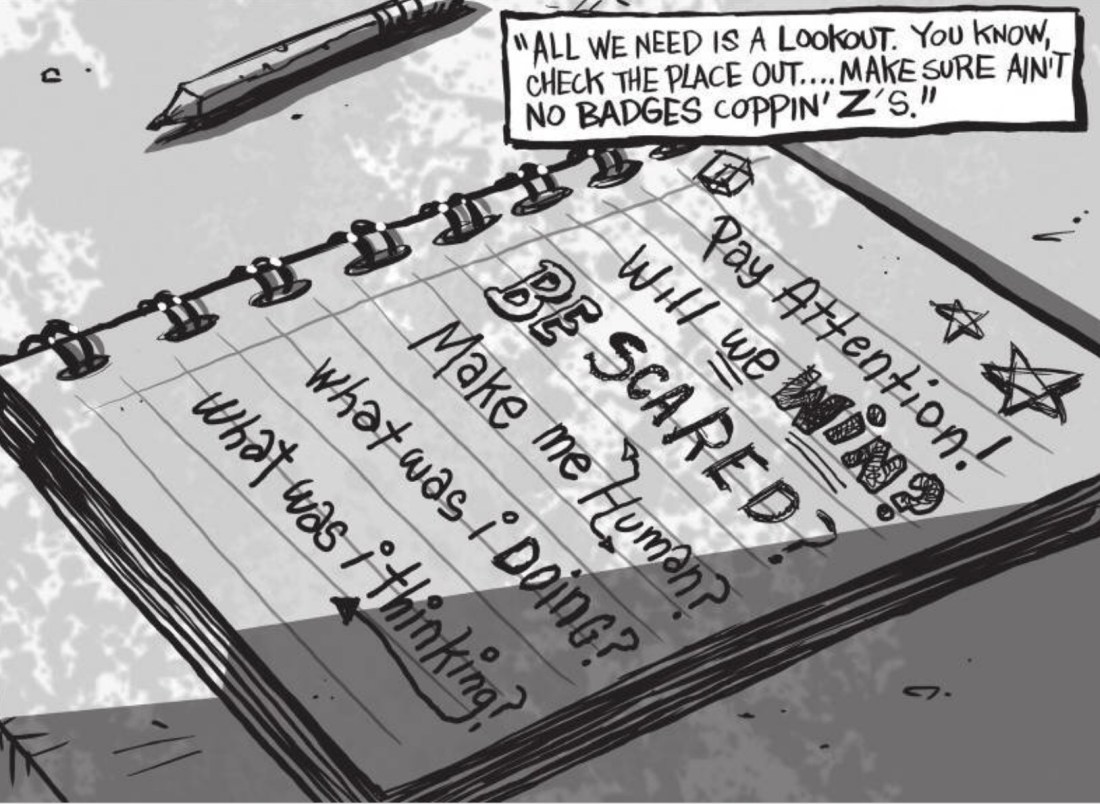
Throughout this book, Steven Harmon records the events he is living out in a notebook that is the first draft of sorts of what might be a film version of the events that led him to and through the murder trial. His inner monologue explores what he perceives the people around him are thinking as he records their actions and reactions to him and his current situation. From his defense attorney to the witnesses in his case, from the co-defendant to the judge and jury members – Steven records what each character is saying and how they react as though he is directing a film about someone else’s life. But it is not someone else’s life.

It is his own life.

It is his own trial.

It is him who is being called a Monster by the prosecuting attorney, and it is him who must rely on the judgement of the jury members to determine whether or not they believe he is guilty of murder or set him free.

Whatever the outcome, his life will never be the same.

What’s done cannot be undone.

What happens now? Where will he go from here?

At sixteen years old he is not even old enough to be a visitor to the prison where he now waits on trial. The irony of the seriousness of his situation is unbelievable to him at times, and yet it is happening and must play out in a court of law.

This thought provoking book cuts straight to the point of a very serious and life-changing event that changes not one, but several lives in the blink of an eye. This book would be best suited upper middle school or high school students who are close to the same age as the main character. While this story is not based on a specific true story, the author did research by visiting with prisoners and asking them to tell him their story. No one plans to be in jail at sixteen years of age. No one plans to be on trial for murder at sixteen, either. But in our current society, these types of situations and circumstances do happen all too often. Young people act without thinking, and live with a belief that nothing bad will ever happen to them. This story is written in a way that can open the discussion about making good choices, and being responsible for the consequences of personal actions.

While I believe there are many possible uses for this book in the classroom setting, I believe that I would choose to use this book to teach point of view, vocabulary, making predictions, and symbolism. I believe the reader will be hooked on the storyline and will be kept interested in the story by the characters who each play a role in how Steven views what is happening to him throughout the trial. Readers will want to continue reading to find out for themselves whether or not the jury returns a guilty verdict. Will he face the next 25 years or more as an inmate? Or will the jury find him not guilty so he can return to his life as a want to be film maker? Is it possible for him to return to his life the way it as before the drugstore owner was murdered? What happens next? The author provides just enough information to answer the big questions, but leaves lots of space to think about how things have the potential to wind up so much differently.

Ideas for Classroom Incorporation of Monster:

  • ELA: making predictions, finding text references, vocabulary, character perspective, point of view, symbolism
  • Social/Emotional: making good choices, associations, consequences, labels
  • HISTORY: judiciary process, legal responsibility, due process

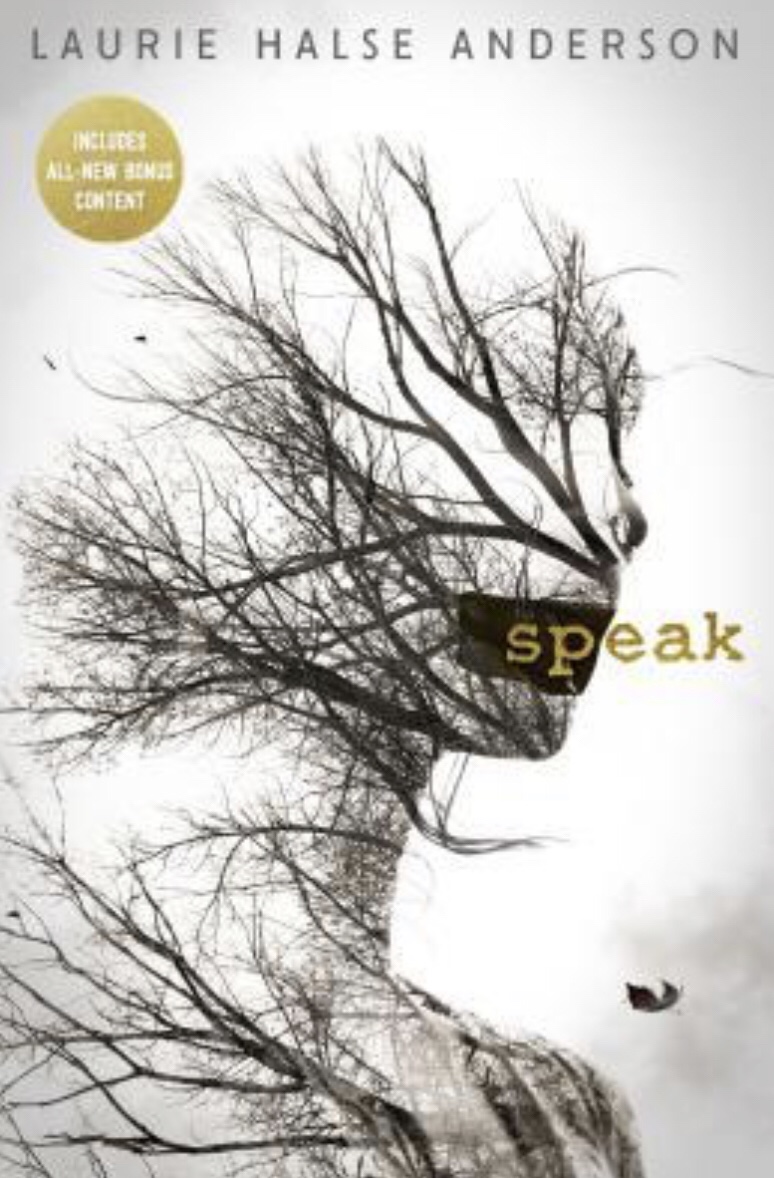
Speak, by Laurie Halse Anderson

This young adult novel addresses the impact of sexual trauma and how one freshman student tries to navigate life after rape. This very real topic that has become a part of too many lives is brought to the forefront of the conversation as the main character Melinda Sordino struggles to find her place in her high school community after the event that changed everything.

This book was a new read for me and the topic and cover art intrigued me. Author Laurie Halse Anderson tackles the painful topic of sexual assault in this young adult novel. While this topic makes people uncomfortable – and silent, Anderson brings this conversation forward using the voice of the main character Melinda. As a female adult, I have experienced high school and all the typically teenage challenges that range from school culture, student groups or clans as named in Speak, and the emotional roller coaster of finding my own feet. Now imagine compounding all of those challenges with the addition of a life altering trauma. Narrated by Melinda, readers hear what this freshman is thinking as she moves forward returning to school with a new reputation and tainted perspective.

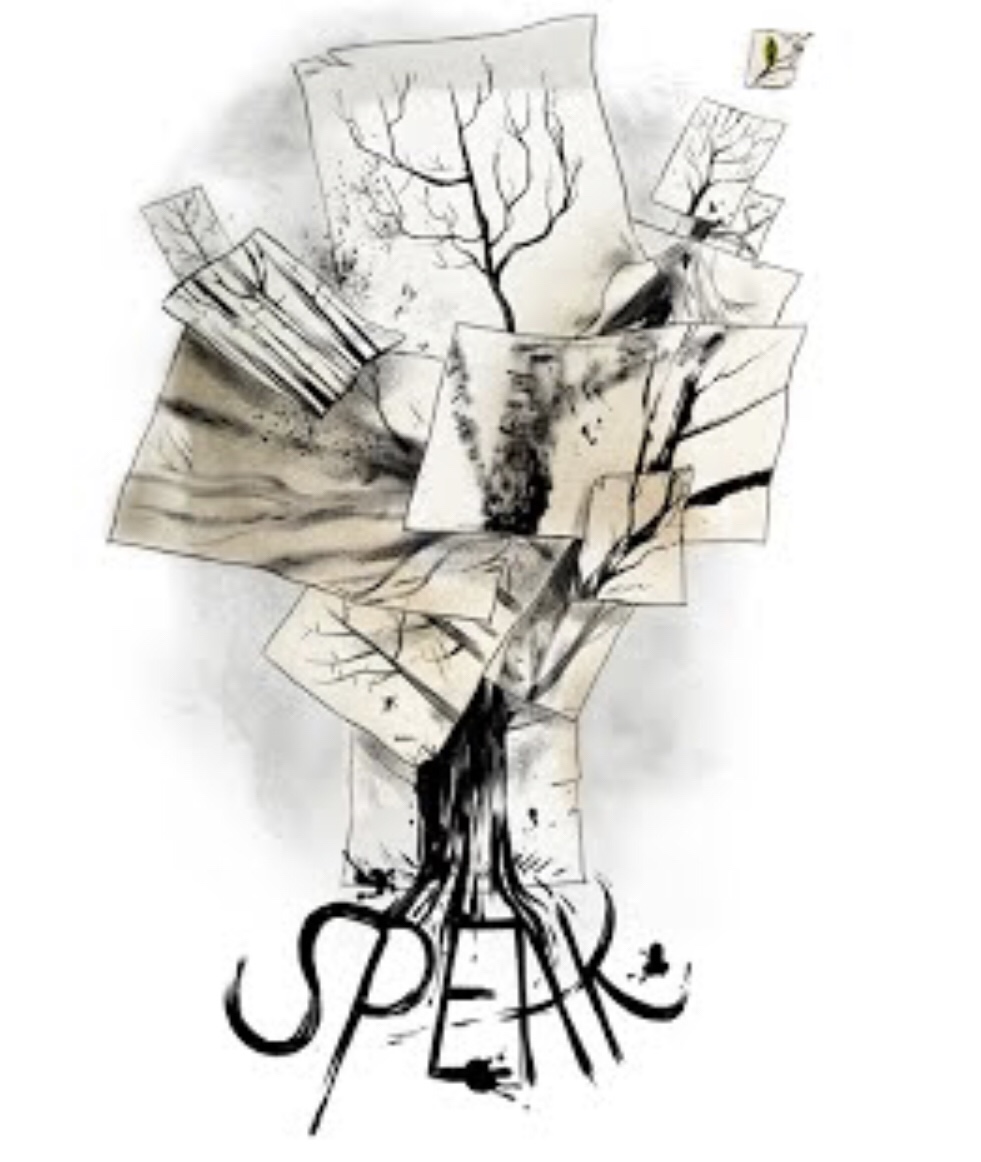
Melinda tries to become invisible in her high school and finds an outlet in the year long assigned art project to transform a tree into an object that makes a statement. Just as Melinda’s friend Ivy describes Melinda’s art as scary, the kind of scary you don’t want to look at for too long, Speak opens up a delicate topic by looking at the person behind the trauma. Melinda is more than a victim, and one event should not and does not define who she is.

There is power in the ability to speak your own truth. This book tackles a topic that too often is not spoken about. While describing the topic as sensitive, controversial, and delicate we still avoid calling it by name. Laurie Halse Anderson puts into words what so many cannot, or have struggled to verbalize.

As a teacher, I appreciate the value of this book and the story that unfolds from it’s pages. I can also admit that it would make me very uncomfortable using it in the classroom. Defensively I will say that I believe my students are too young, or that the topic is too mature. Honestly I know that students endure trauma of all sorts and it the very things that make common society uncomfortable need to be addressed in a way that allows our children to heal and move forward.

After reading Speak, I would suggest this selection for 8th grade classes and above. The content invites students and teachers to make connections to the text to extend personal and academic growth. This age group is preparing to enter the highly social realm of high school and all that that entails. They are aware of mature and sensitive topics, and they are still bold enough to speak up and speak their minds.

Ideas for Classroom Incorporation of Speak:

  • ELA – symbolism, point-of-view, inferencing, expository writing, vocabulary, summarizing, visualization
  • Social/Emotional – personal trauma, social interaction, school culture, behavior, reporting procedures, community resources