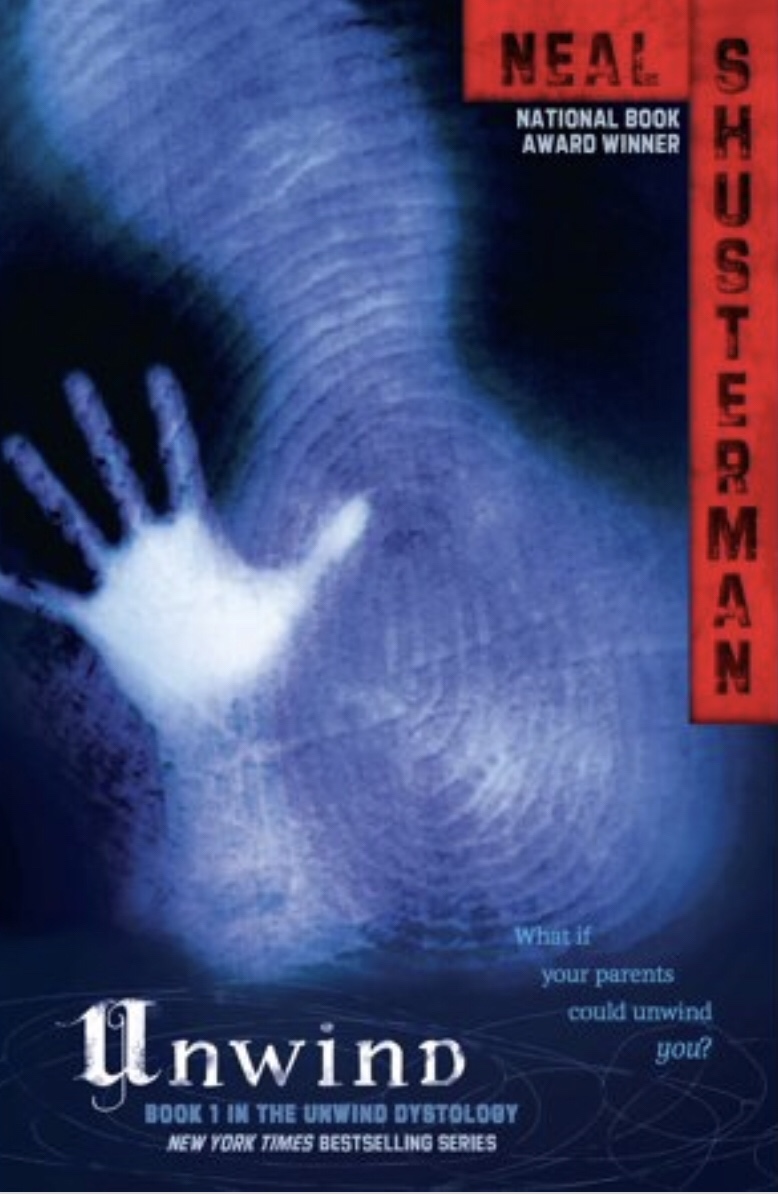
What are the potential possibilities when the concept of harvesting divided bodies for their parts becomes part of the lawful state? Who is safe? Is it possible to be an Unwind and still continue to live? Who decided this plan was a good idea? And why doesn’t anyone make it stop?
In this young adult novel, Neal Shusterman takes the reader down a dark and disturbing road to a time when teenagers are marked to be unwound. To have their organs harvested for the benefit of those more desirable than the terribles who will be taken apart piece by piece. What about the Unwinds who are thrust into harvest because of family beliefs that it is the responsible thing to do? These teenagers who are donated, or tithes as they are called, are groomed to believe that their lives have a higher calling because they were fulfilling their destiny to help their fellow man by donating their healthy body parts to those who would transplant or graph them to a person in need.
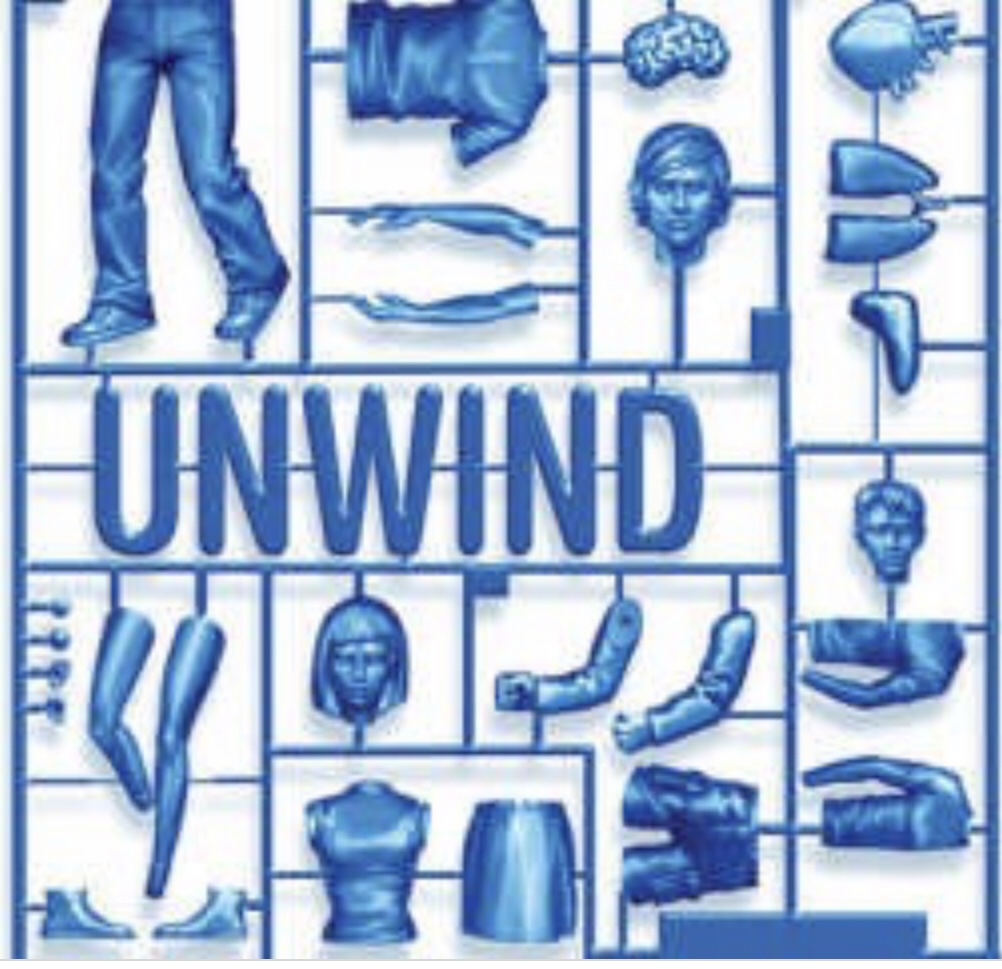
In this dystopian society, the practice of unwinding is completely normal and everyone has a role to play. You are either an Unwind, or you are someone who remains eligible to receive organs or other body parts because you have positively contributed to society and your community. As an Unwind, you will not benefit from the removal and transplant of your parts – but the law promises that you will be left alive. Harvesting body parts and organs is not intended to kill a person, it is just intended to extend or improve the life of others.
As a teacher, this book presents so many different conversation starters for the classroom. The connection to current events, ethics, morality, justice, fairness, human rights, symbolism, characterization, tone, and perspective are just a handful of ideas that come to mind after reading this book. There are main characters, who each present a different journey to being an Unwind. A girl and two boys who readers follow throughout the story as they encounter many more secondary characters who directly shape and potentially shift how the reader feels about each character. There are characters for readers to love, and some to hate. Each one bringing additional depth to this book that has chilling references to current events and places that the readers will recognize as real in our everyday world.
Being an elementary school teacher, this book is outside of what I would normally select for classroom use for my students. I cannot deny that I believe some of my previous students would be interested in this book for the shock and chaos elements that make up so much of the complex storyline. I would recommend this book for upper middle school, or high school students based on maturity and exposure to complex concepts – their developmentally appropriate ability to separate fact and fiction.
Personally, I am still not sure I can say whole heartedly that I liked this book. But – I am definitely intrigued about what happens next. This book is the first in a series by Neal Shusterman and it was a book that once I began reading I wanted to stop but couldn’t stop because I was compelled to know what happened next. I have talked about this book to everyone I spoke to this week. Like it or not, it absolutely held my attention and made me think!
Ideas for Classroom Incorporation of Unwind, by Neal Shusterman
- ELA: have students write their own Bill of Life, write an argument for or against unwinding, debate unwinding, create character webs identifying internal and external traits for 1 main and 1 secondary character, create a trailer for the prequel of Unwind that explains how and why unwinding came to be
- SCIENCE: (biology) anatomy
- ECONOMICS: budgeting, how to financially support yourself – your family – an underground community in the dystopian state, establish financial rules for different elements of society
 Mrs. Kinnamore’s Bookshelf