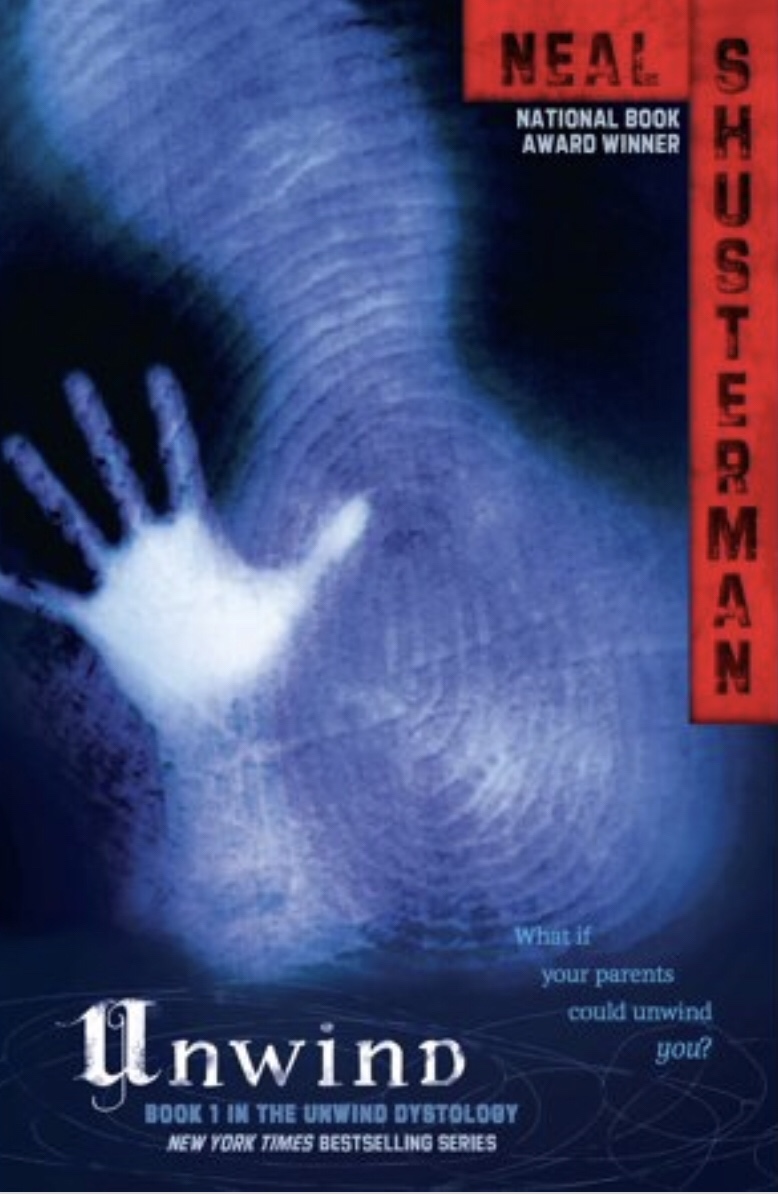
Unwind, by Neal Shusterman

What are the potential possibilities when the concept of harvesting divided bodies for their parts becomes part of the lawful state? Who is safe? Is it possible to be an Unwind and still continue to live? Who decided this plan was a good idea? And why doesn’t anyone make it stop?

In this young adult novel, Neal Shusterman takes the reader down a dark and disturbing road to a time when teenagers are marked to be unwound. To have their organs harvested for the benefit of those more desirable than the terribles who will be taken apart piece by piece. What about the Unwinds who are thrust into harvest because of family beliefs that it is the responsible thing to do? These teenagers who are donated, or tithes as they are called, are groomed to believe that their lives have a higher calling because they were fulfilling their destiny to help their fellow man by donating their healthy body parts to those who would transplant or graph them to a person in need.
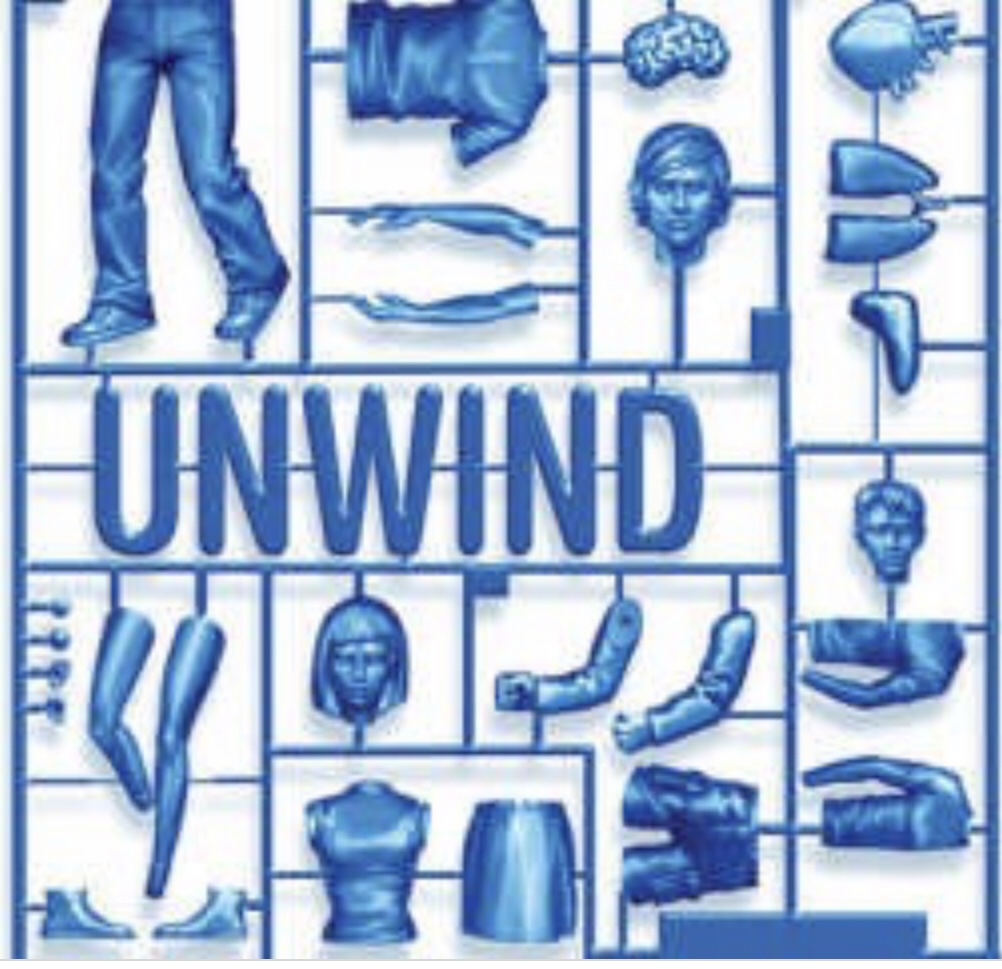
In this dystopian society, the practice of unwinding is completely normal and everyone has a role to play. You are either an Unwind, or you are someone who remains eligible to receive organs or other body parts because you have positively contributed to society and your community. As an Unwind, you will not benefit from the removal and transplant of your parts – but the law promises that you will be left alive. Harvesting body parts and organs is not intended to kill a person, it is just intended to extend or improve the life of others.

As a teacher, this book presents so many different conversation starters for the classroom. The connection to current events, ethics, morality, justice, fairness, human rights, symbolism, characterization, tone, and perspective are just a handful of ideas that come to mind after reading this book. There are main characters, who each present a different journey to being an Unwind. A girl and two boys who readers follow throughout the story as they encounter many more secondary characters who directly shape and potentially shift how the reader feels about each character. There are characters for readers to love, and some to hate. Each one bringing additional depth to this book that has chilling references to current events and places that the readers will recognize as real in our everyday world.

Being an elementary school teacher, this book is outside of what I would normally select for classroom use for my students. I cannot deny that I believe some of my previous students would be interested in this book for the shock and chaos elements that make up so much of the complex storyline. I would recommend this book for upper middle school, or high school students based on maturity and exposure to complex concepts – their developmentally appropriate ability to separate fact and fiction.

Personally, I am still not sure I can say whole heartedly that I liked this book. But – I am definitely intrigued about what happens next. This book is the first in a series by Neal Shusterman and it was a book that once I began reading I wanted to stop but couldn’t stop because I was compelled to know what happened next. I have talked about this book to everyone I spoke to this week. Like it or not, it absolutely held my attention and made me think!

Ideas for Classroom Incorporation of Unwind, by Neal Shusterman

  • ELA: have students write their own Bill of Life, write an argument for or against unwinding, debate unwinding, create character webs identifying internal and external traits for 1 main and 1 secondary character, create a trailer for the prequel of Unwind that explains how and why unwinding came to be
  • SCIENCE: (biology) anatomy
  • ECONOMICS: budgeting, how to financially support yourself – your family – an underground community in the dystopian state, establish financial rules for different elements of society
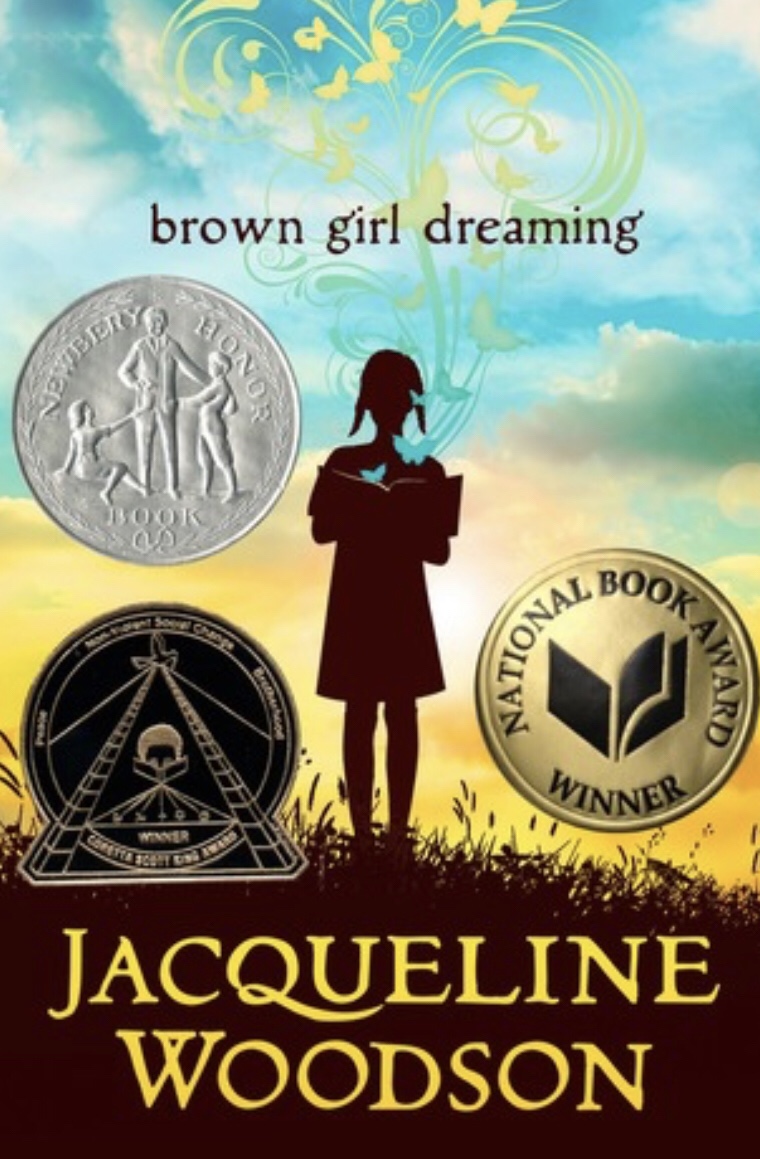
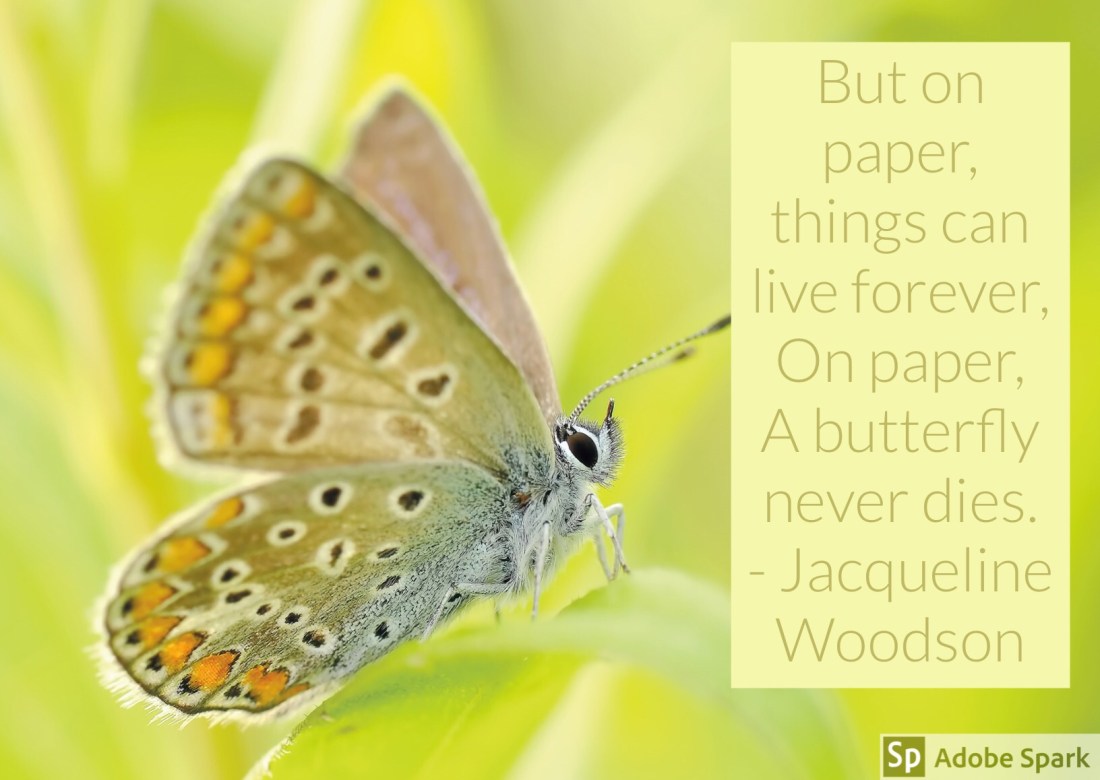
Brown Girl Dreaming, by Jacqueline Woodson

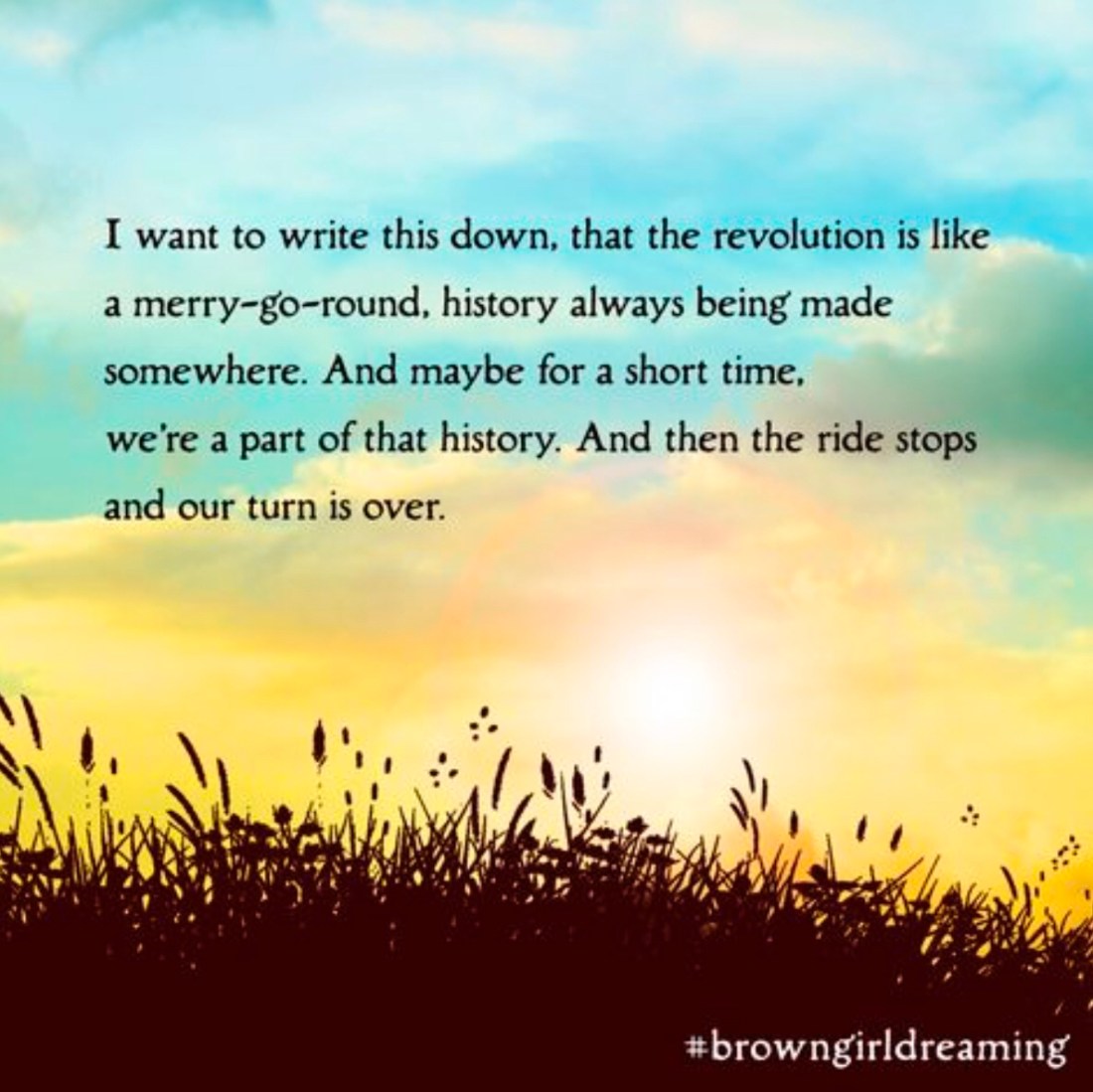
This young adult book takes readers on a journey back in time as author Jacqueline Woodson recalls her own life as an African American child growing up in the United States during the Civil Rights movement. Written in verse, the book connects the reader to young Jackie as she recalls her family life, her church life, her school experiences, and her own story told by the one who knows it best.

As the book begins, readers learn about the story of how Jacqueline Woodson was named when she was born. Names are important when we begin to tell the story of who we are. In this story it lays the foundation for sharing not only about the author, but about the family that was woven in to the tapestry of her life. Brown Girl Dreaming is an autobiography written in verse. The words are pieced together delicately, elegantly, simply.

She writes about her place in her family, how she looked like her sister but was so very different. She writes about her choice to write Jackie instead of Jacqueline, because of her struggle with the cursive Q. She writes of the separation from her mother while she went to New York, and the days and night she spent waiting for her mother to come get her from her Grandmother’s home. She writes about the rules of society, that people keeping to their own kind was both a source of friction and the accepted norm. She writes about what she thought she knew as a child, and how writing allowed her to find what she really knew.

Telling her story she shares how her teacher told her, “You are a writer” and she believed her.

Brown Girl Dreaming is not a fairy tale. It is about a real girl with a real family with real experiences and real dreams. The author does not inflate or diminish her story to create a more appealing version for the reader. What she does do is recall her own memories and story by retelling her story in her own words in her own way.

I purchased this book as an audio book and listened to the author read her story as though I was eavesdropping on a private conversation. Jacqueline Woodson is a remarkable story teller, but not in the fantastically superficial way that I have come to expect when describing a story teller. I enjoyed the simplicity of this book, and all the ways I was able to find myself connecting to her story even though culture and society screams that I should not be able to because she and I are different. We are different. Yet, I found over and over again bits and pieces of her story that I could and can relate to as I listened.

As a teacher, I can absolutely see using this book in the classroom and recommending it to my students and colleagues. So often we teach and learn about the famous people involved in pivotal moments of the civil rights movement without hearing the deeply personal impact in the everyday life of so many. Jacqueline Woodson brings her culture, her history, and her story to the talking table with this book. I believe that students would find her style of writing intriguing as she writes as though she were speaking to a friend. The connections written about in this book could extend beyond English Language Arts and Reading to history and social studies. This book opens up many possibilities for students to explore writing their own story in their own way.

We all have a story to tell. Brown Girl Dreaming is the story of Jacqueline Woodson in her own words written in her own way. And, it is beautiful!

Ideas for Classroom Incorporation of Brown Girl Dreaming:

  • ELA – genre, autobiography, writing style, poetry, personal narrative, text to self connections, story mapping

  • HISTORY – the Civil Rights Movement, Langston Hughes, Jesse Jackson, Ruby Bridges, Rosa Parks, Greenville, NC
  • GEOGRAPHY – 50 states, New York City, North Carolina, Ohio, map skills, city map of New York City and it’s districts
  • MATH – figuring distance between two places, budget, cost of living